Choosing the right roller conveyor system can significantly impact your business's efficiency. According to industry expert John Smith, "The right roller conveyor system optimizes workflow and enhances productivity." Companies often struggle with selecting the ideal system.
The complexity lies in understanding the specific needs of your operations. Each business has unique requirements, making a one-size-fits-all approach ineffective. For instance, the load capacity and speed of the conveyor must match your product types.
Moreover, installation and maintenance cannot be overlooked. An unsuitable choice may lead to frequent breakdowns. Consequently, downtime affects overall productivity. Evaluating the long-term benefits versus initial costs is crucial. Many businesses find themselves reflecting on these decisions, realizing that what seemed like a small choice led to larger operational challenges. Understanding these aspects is vital for making an informed decision.
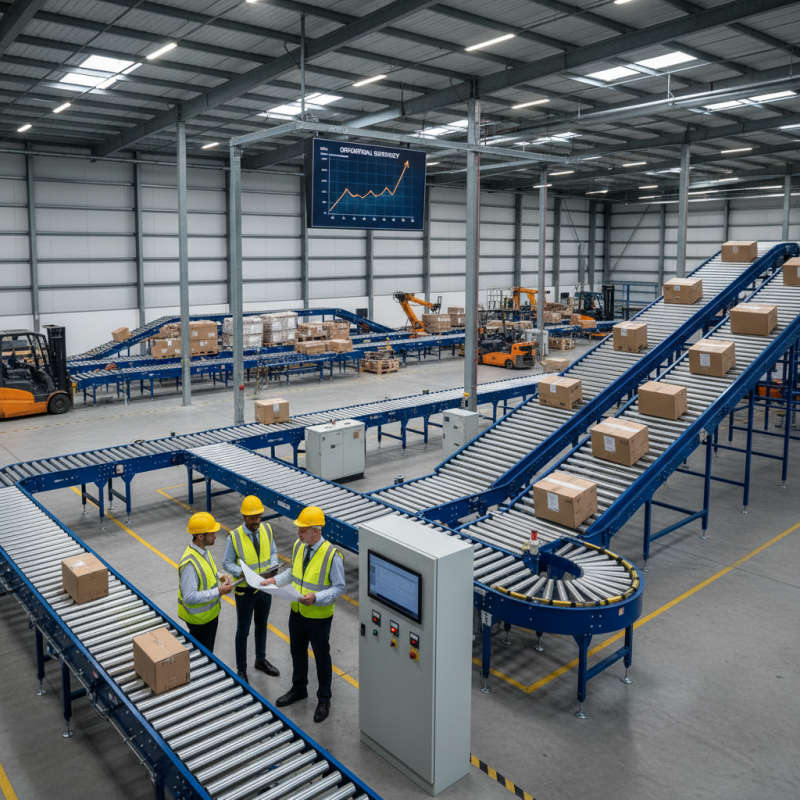
When selecting a roller conveyor system, it's crucial to grasp the types available. Roller conveyor systems come in various forms, each serving specific purposes. For instance, motorized rollers are excellent for heavy loads. They require minimal manual effort. Conversely, gravity roller conveyors rely on natural forces. They are ideal for lighter materials and are cost-effective.
According to industry reports, the global conveyor systems market is projected to reach $7 billion by 2027. This growth reflects the increasing demand for automation. Automated systems can enhance efficiency but may not always fit all operations. The choice often hinges on load capacity and space considerations. Width and length vary, influencing product flow.
Evaluating your unique operational needs might reveal gaps. Often, businesses overlook maintenance requirements when choosing a system. Regular upkeep can prevent downtime and extend equipment life. Data shows that system failures lead to losses in productivity. A thoughtful approach to assessing options is necessary. Companies must weigh costs against potential losses due to inefficiency.
Choosing the right roller conveyor system begins with understanding your load capacity needs. Every business has unique requirements. A small warehouse might handle lighter loads, while a larger facility may need heavy-duty systems. Consider the types of items you transport. Are they bulky, fragile, or oddly shaped? This factor greatly influences your system selection.
Analyzing load capacity requires thorough assessment. You should measure not only the weight but also the dimensions of the items. Oversized loads may not fit on standard rollers. Take time to evaluate your maximum load capacity. Ignoring this can lead to operational failures. You might end up with a conveyor that struggles under pressure. This could result in delays or even damage to products.
Improperly matched systems often lead to inefficiencies. If your conveyor cannot handle the weight, it will wear out faster. In a busy environment, this can create disruptions. Workers may face frustration with equipment that doesn’t perform as needed. Reflecting on your load capacity allows for better decision-making. It can save time and costs in the long run. Aim for a balance between capacity and performance for optimal results.
Choosing the right roller conveyor system hinges on understanding conveyor speed. Speed directly affects workflow efficiency. A conveyor that moves products too slowly can cause backups. Conversely, a conveyor that is too fast may lead to accidents or product damage. Evaluating your specific operational needs is crucial.
Tips: Assess your product types. Different items require varying speeds for optimal handling. For example, fragile items need slower speeds to prevent breakage. Also, consider the layout of your workspace. If space is limited, faster systems might not always be better.
It's easy to overlook the human factor. Workers need time to react to moving products. If items travel too quickly, this can create stress. Slow down the speed occasionally to maintain safety. A balance is essential for productivity and worker comfort. Reflecting on how speed impacts everyone is vital for a successful operation.
| Conveyor Type | Speed (m/min) | Load Capacity (kg) | Application | Efficiency Impact |
|---|---|---|---|---|
| Roller Conveyor | 30 | 150 | Material Handling | High |
| Flexible Conveyor | 25 | 100 | E-commerce | Moderate |
| Power Belt Conveyor | 40 | 200 | Heavy Goods | Very High |
| Accumulating Conveyor | 20 | 120 | Sorting | High |
| Chain-driven Roller Conveyor | 35 | 250 | Automotive Industry | Very High |
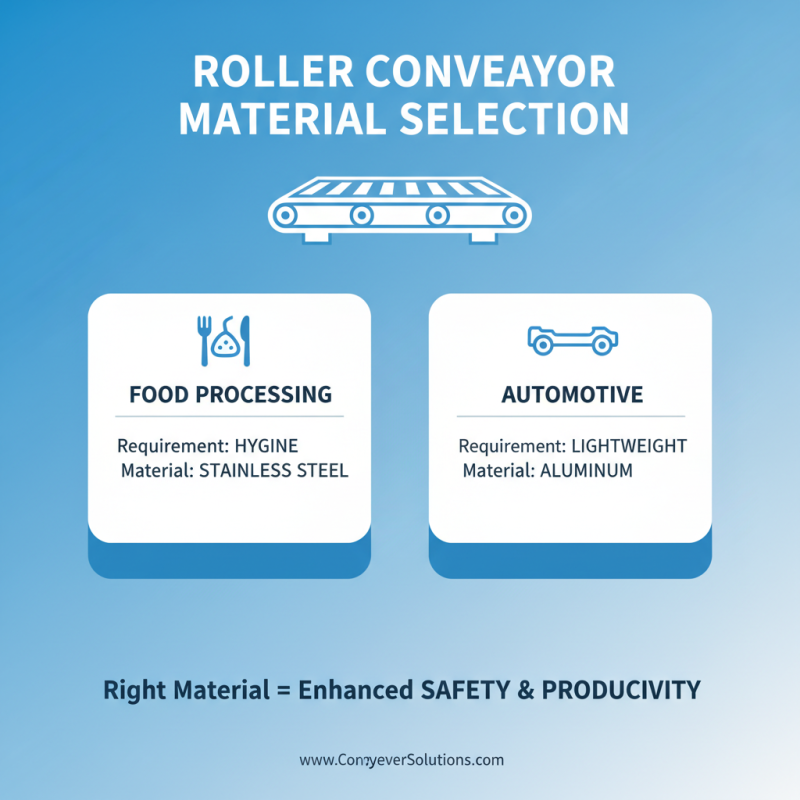
When selecting a roller conveyor system, material choice is crucial for efficiency. Different industries have unique requirements. For instance, food processing often mandates stainless steel for hygiene. Meanwhile, automotive sectors may favor aluminum for its lightweight properties. The right material enhances safety and productivity.
Data from the Material Handling Industry reports that around 70% of warehouses use roller conveyors. However, only 30% feel satisfied with their system's specifications. This mismatch highlights potential for improvement. In heavy-duty applications, plastic may not suffice against steel. Likewise, industries like pharmaceuticals necessitate corrosion-resistant options.
Cost and durability should not be overlooked. Some businesses choose low-cost materials, but this can lead to higher maintenance expenses in the long run. A recent survey indicated that companies often underestimate long-term wear and tear. Thus, proper material selection could minimize unexpected downtime. Each industry presents unique challenges—failure to acknowledge these can impact overall performance.
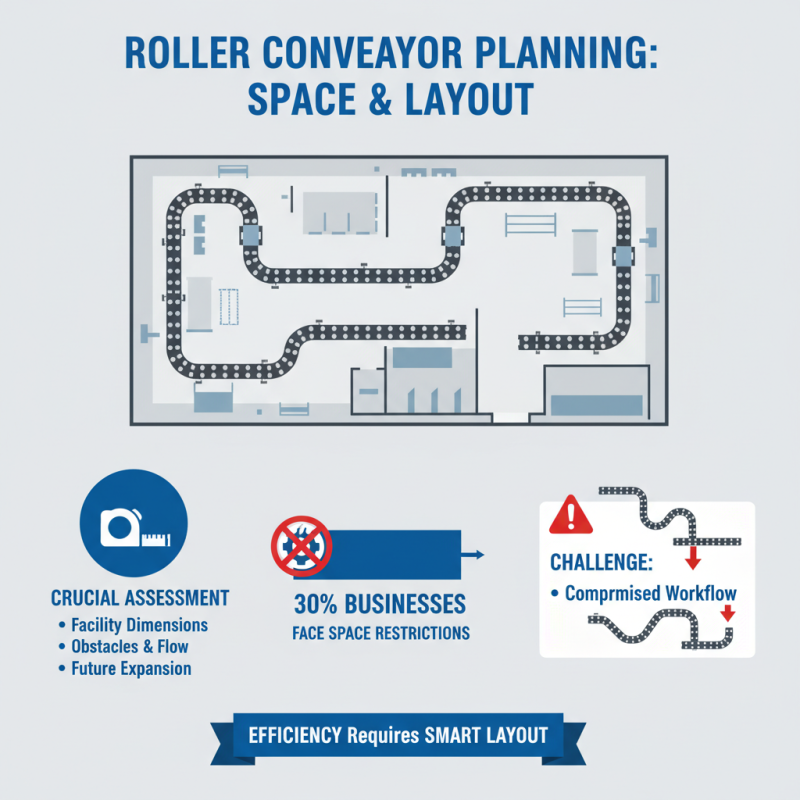
When planning for a roller conveyor system, assessing space and layout is crucial. Most facilities have unique challenges. According to a study by the Material Handling Institute, around 30% of businesses face space restrictions that hinder efficient conveyor installations. Simply fitting a system into a tight area can compromise workflow.
Measure your available space thoroughly. Consider the height, width, and length of the conveyor layout. A poorly planned installation can lead to bottlenecks. A maximum of 48 inches in height is often recommended for ease of operation. However, if your system is too low, workers might struggle. If it’s too high, it can lead to safety concerns.
Moreover, the layout must align with existing workflows. Inadequate assessments may lead to costly adjustments. An optimal design allows for 20-25% more product flow. Analyze each section before installation, noting potential obstacles. An efficient conveyor is one that complements your existing space, contributing to a smoother operation. Reflections on current setups can reveal hidden inefficiencies.