Blog

How to Choose the Right Lantech Stretch Wrapper in 2026?

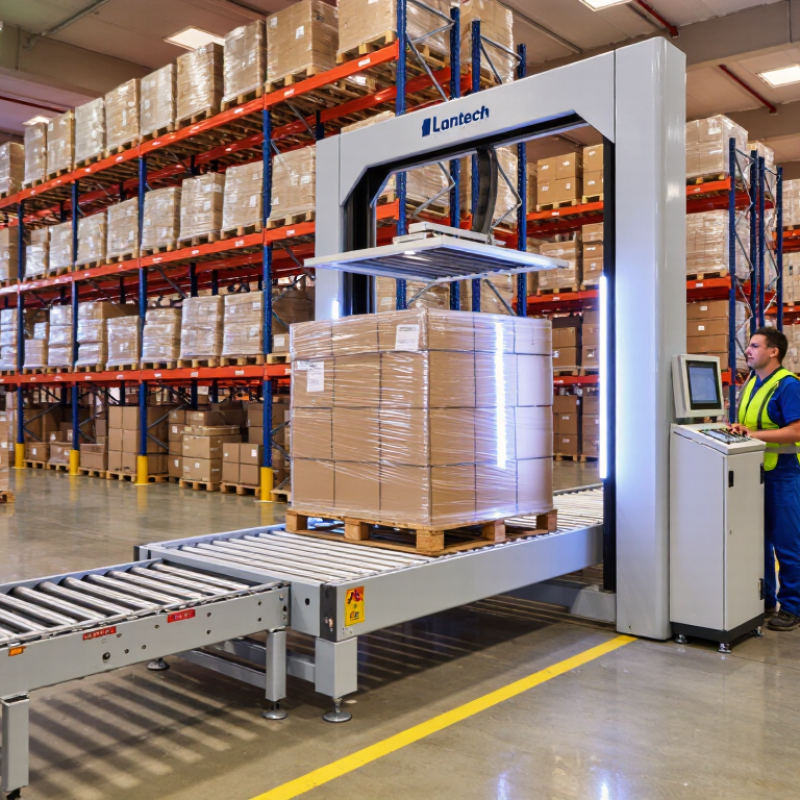
Choosing the right lantech stretch wrapper in 2026 requires more than comparing machine prices. A pallet may look stable under warehouse lights, yet shift during a sharp turn, cold-storage transfer, or long-distance shipment. Real selection begins with evidence: load dimensions, product weight, pallet quality, daily throughput, film type, and required containment force.

PMMI’s 2024 State of the Industry report identifies labor efficiency, automation, and sustainability as major packaging-equipment priorities. These pressures directly affect wrapper selection. A high-volume facility may need automatic film cutting and reliable conveyor integration. A smaller operation may gain more from simple controls, flexible changeovers, and accessible maintenance. Smithers’ The Future of Stretch and Shrink Films to 2028 also highlights continuing changes in film performance, downgauging, and material efficiency. Therefore, film pre-stretch capability should be judged against the actual film specification, not marketing claims.

The best lantech stretch wrapper is not always the fastest model. It is the machine that secures loads consistently while controlling film use, labor, downtime, and service costs. I would test representative pallets, including uneven cartons and weak corners. A clean specification sheet can still mislead. Measure film consumption, wrap time, load movement, and operator handling during a practical trial. Energy use matters too, although published figures may vary with configuration and operating conditions. In 2026, responsible buyers should compare total cost of ownership, safety features, supplier support, and upgrade potential. One uncomfortable truth remains: the “perfect” wrapper may not exist. The right choice depends on disciplined testing and honest operational data.
How to Choose the Right Lantech Stretch Wrapper in 2026?

Define Your Packaging Needs and Load Requirements

Choosing the right stretch wrapper starts with defining the load, not browsing machine features. Record pallet length, width, height, and weight across a normal production week. Include the awkward loads. They often expose weaknesses. Note whether products are rigid cartons, soft bags, drums, or mixed cases. Measure overhang, uneven tops, and sharp corners. These details influence film tension, carriage control, and wrap coverage. A 40-inch pallet may need different settings from a narrow, unstable load. Do not guess.

Packaging goals matter just as much. Estimate pallets per hour, shift duration, and expected seasonal peaks. Check where the wrapper will operate, including floor condition, temperature, dust, and available power. A high-output unit can become wasteful when only a few pallets need wrapping daily. Conversely, a slow machine may create a queue beside shipping doors. Define the required containment force and film pre-stretch after testing actual products. Ask operators to record broken film, leaning loads, and rewraps. Their notes are often more useful than a sales sheet.

Load behavior should guide safety and automation choices. Tall, light pallets may need a rotating arm or gentler acceleration. Heavy, stable pallets may suit a turntable design. Consider forklift access, guarding, emergency stops, and routine cleaning. A reliable specification includes film width, core size, roll diameter, and replacement frequency. Run trials with representative loads, including the worst reasonable case. One successful test proves little. Recheck results after transit simulation and a full shift. I would leave room for adjustment, because actual packaging conditions rarely match the first spreadsheet. An honest review of failures can prevent an expensive machine mismatch.
Compare Lantech Stretch Wrapper Types and Configurations

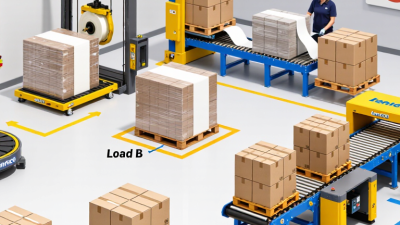
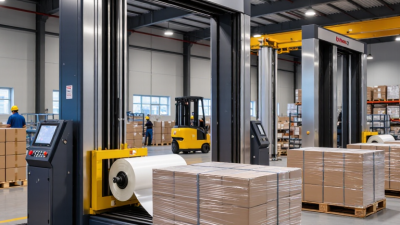
Choosing the right stretch wrapper in 2026 requires comparing machine types, not just output speed. Turntable models suit stable pallets and moderate volumes. Rotary-arm systems protect unstable or lightweight loads because the pallet remains still. Ring systems support continuous, high-speed lines, but they demand accurate product spacing and stronger maintenance skills. PMMI’s 2024 State of the Industry report highlights labor shortages and automation as major packaging priorities. That makes automatic film cutting, powered conveyors, and recipe controls increasingly valuable.

Configuration matters as much as machine style. A powered pre-stretch carriage can reduce film use, while adjustable wrap force helps prevent crushed cartons. Check the maximum load height, pallet weight, corner stability, and daily cycles. MHI’s 2024 Annual Industry Report found that 55% of supply-chain professionals planned increased technology investment. Still, more automation does not always mean better performance. A fast wrapper can create bottlenecks if conveyors, film supply, or pallet handling cannot match it. That is an easy mistake to miss.

Tips: Test three real loads, including one unstable pallet. Measure film consumption per load, not only machine speed. Ask operators to perform a changeover during the trial. Their feedback may reveal awkward controls or poor access. Also review data from the Association for Packaging and Processing Technologies, which emphasizes workforce capability and equipment integration in modern packaging operations. A careful comparison may favor a simpler configuration. That is not a failure. It may be the more reliable choice.

How to Choose the Right Lantech Stretch Wrapper in 2026? - Compare Lantech Stretch Wrapper Types and Configurations

Wrapper Type Typical Throughput Typical Load Dimensions Typical Load Weight Best-Fit Applications Key Configuration Options Main Selection Consideration
Turntable Wrapper Up to approximately 20 loads/hour Up to about 1,200 × 1,200 mm; height commonly up to 2,400 mm Usually up to 2,000 kg Low- to medium-volume operations, mixed pallet sizes, occasional wrapping Powered pre-stretch, adjustable turntable speed, top-sheet dispenser, ramp, film cut-and-weld unit Requires space for the turntable and safe loading access
Rotary-Arm Wrapper Approximately 20–40 loads/hour Commonly up to 1,200 × 1,200 mm; height may reach about 2,500 mm Often up to 2,000 kg, depending on conveyor design Unstable, lightweight, tall, or irregular loads that should remain stationary Variable arm speed, automatic film carriage, load-height sensing, corner-board integration, powered conveyors Useful when rotating the load could cause shifting or product damage
Orbital Wrapper Approximately 15–35 loads/hour Suitable for long, narrow, or low-profile products; opening sizes are application-specific Determined mainly by conveyor capacity Profiles, furniture, doors, coils, pipes, and elongated products Horizontal or vertical ring, film or paper wrapping, automatic product spacing, multiple film dispensers Best when the product cannot be wrapped efficiently on a standard pallet turntable
In-Line Conveyor Wrapper Approximately 30–80 loads/hour Common pallet footprints include 800 × 1,200 mm and 1,000 × 1,200 mm Often 500–2,000 kg, subject to conveyor rating Continuous production lines, distribution centers, and automated pallet handling Powered roller or chain conveyor, automatic film cut-and-weld, barcode interface, PLC controls, safety guarding Needs compatible upstream and downstream conveyor layouts
Automatic Pallet Wrapper Approximately 40–100 loads/hour Typically 800–1,200 mm wide and up to about 2,400 mm high Usually up to 2,000 kg per load High-volume packaging lines requiring consistent wrapping and minimal operator involvement Automatic film threading, load detection, top-sheet placement, remote diagnostics, recipe storage Higher purchase cost is justified when labor reduction and repeatability are priorities
Semi-Automatic Wrapper Approximately 15–30 loads/hour Commonly up to 1,200 × 1,200 × 2,400 mm Often up to 2,000 kg Warehouses with moderate demand and multiple load profiles Operator film attachment, powered pre-stretch, adjustable wrap cycles, photo-eye height detection Balances lower investment with improved film control and operator safety
Mobile Robot Wrapper Approximately 10–25 loads/hour Flexible pallet sizes; practical limits depend on navigation and load stability Commonly 1,000–2,000 kg Facilities with changing wrap locations, limited fixed-line infrastructure, or frequent layout changes Battery operation, automatic docking, adjustable wrap cycles, collision sensors, route memory Floor condition, aisle clearance, battery charging, and navigation reliability are critical

Configuration Comparison for 2026

Configuration Factor Entry-Level Choice Production-Focused Choice When to Upgrade
Film Pre-Stretch Manual or fixed mechanical stretch Powered, adjustable pre-stretch with controlled film tension Upgrade when film consumption, containment, or load consistency is a concern
Control System Basic buttons and preset cycles Touchscreen recipes, diagnostics, and line communication Upgrade when several products require different wrap patterns
Film Application Manual film attachment and cutting Automatic film cut, seal, and tail treatment Upgrade when operator time or film-tail quality affects throughput
Load Protection Standard wrap cycle with adjustable top and bottom wraps Variable tension, reinforcement bands, top-sheet application, and corner protection Upgrade for fragile, dusty, weather-sensitive, or export shipments
Safety Features Emergency stop and basic guarding Interlocked guarding, light curtains, area scanners, and safety-rated controls Upgrade when the machine is integrated into an automated production cell
Data and Maintenance Manual production records and scheduled inspections Film usage monitoring, fault history, remote support, and preventive-maintenance alerts Upgrade when downtime tracking and measurable film savings are business priorities

Note: Capacity, dimensions, and weight ranges are typical planning values. Actual performance depends on load stability, film specification, conveyor layout, operating procedures, and local safety requirements.

Evaluate Machine Performance, Automation, and Safety Features

How to Choose the Right Stretch Wrapper in 2026?

Evaluate Machine Performance, Automation, and Safety Features

When evaluating a stretch wrapper in 2026, start with measured performance, not brochure speed. Record pallets per hour, film usage, load stability, and downtime during a normal shift. A machine that turns 40 pallets quickly may waste film or require frequent resets. Watch the film carriage around uneven loads. Does tension remain steady at corners? Ask operators to test fragile cartons, heavy cases, and mixed pallet heights. Real loads reveal more than a demonstration.

Automation should remove repetitive decisions without hiding useful controls. Check whether the wrapper adjusts film tension, rotation speed, and wrap counts consistently. Integration with conveyors, scanners, or warehouse software can reduce manual touches. However, confirm recovery steps after a sensor fault. Can an operator restart safely without calling maintenance? Simple screens matter. During site trials, time each changeover and record error messages. I would also test poor barcode reads; ideal conditions rarely last.

Safety performance deserves hands-on inspection. Look for guarded moving parts, accessible emergency stops, light curtains, and clear lockout points. Verify that alarms are audible on a noisy floor. Ask for documented risk assessments, service intervals, and operator training records. A safety feature that workers bypass is a design warning. Do not assume every setting suits every load. Review incidents and near misses honestly, then adjust procedures with the people using the machine daily.

Match the Wrapper to Your Budget, Facility, and Workflow

Choosing the right stretch wrapper in 2026 starts with the facility, not the machine brochure.

Measure load height, pallet width, aisle clearance, and daily output. A compact turntable model may suit a small warehouse with steady, moderate volume. It usually needs less floor space and simpler operator training.

Budget should include film use, maintenance, electricity, and labor. In warehouse audits, inconsistent film tension often costs more than expected. A machine with automatic tension control can reduce damaged corners and loose loads. However, advanced controls may exceed the needs of a low-volume operation.

Keep it practical. For uneven loads, fragile cartons, or frequent product changes, adjustable wrapping programs provide useful control. Rotary-arm equipment may work better when loads are unstable or cannot rotate safely.

Workflow matters just as much. A high-output shipping line needs powered conveyors, automatic film cutting, and connection points for sensors. A manual staging area may gain little from those features.

Check service access, spare-part availability, and training requirements before purchasing. I once focused too heavily on speed and underestimated cleaning time around the film carriage. That mistake affected daily output.

Test the wrapper with real pallets, including short, tall, light, and irregular loads. Ask operators to run the trial. Their feedback often reveals awkward controls, blocked walkways, or delays that specifications do not show.

Verify Installation, Maintenance, Support, and Future Scalability

How to Choose the Right Stretch Wrapper in 2026?

A reliable stretch wrapper begins with verified installation, not a low purchase price. Ask for a documented site survey, floor-load check, electrical review, and operator training record. The installer should test film tension, turntable balance, guarding, sensors, and emergency stops under real pallet conditions. Deloitte’s 2024 Smart Manufacturing Survey found that 86% of manufacturers expect smart manufacturing to become a major competitiveness driver within five years. Your wrapper should therefore provide usable production data, not just a control screen.

Maintenance planning matters just as much. Request a preventive-maintenance schedule covering rollers, chains, bearings, sensors, and film-carriage components. Confirm spare-parts availability and response times before signing. MHI’s 2024 Annual Industry Report identifies labor shortages and technology adoption as continuing supply-chain pressures. Remote diagnostics can reduce troubleshooting time, but they cannot replace skilled inspection. I have seen minor film-tracking issues become expensive downtime when ignored. That lesson is easy to overlook.

Tips: Measure average pallets per hour, film consumption, and unplanned stops for thirty days. Keep those figures as your baseline. Ask support teams for escalation procedures, service coverage, and training updates. Check whether software updates work with future conveyors, scanners, and warehouse systems. Do not assume “compatible” means seamless. Test it. Also review the warranty exclusions carefully; this small document may reveal the real ownership cost.

How to Choose the Right Stretch Wrapper in 2026

Recommended evaluation priorities for installation, maintenance, support, and future scalability

The chart uses a practical 100-point procurement framework: installation verification confirms safe commissioning and operator readiness; maintenance measures preventive-care planning and uptime protection; support evaluates response preparedness and spare-parts access; scalability measures the ability to handle future production growth, additional film formats, and system integration.