10 Essential Tips for Choosing the Right Case Erector?
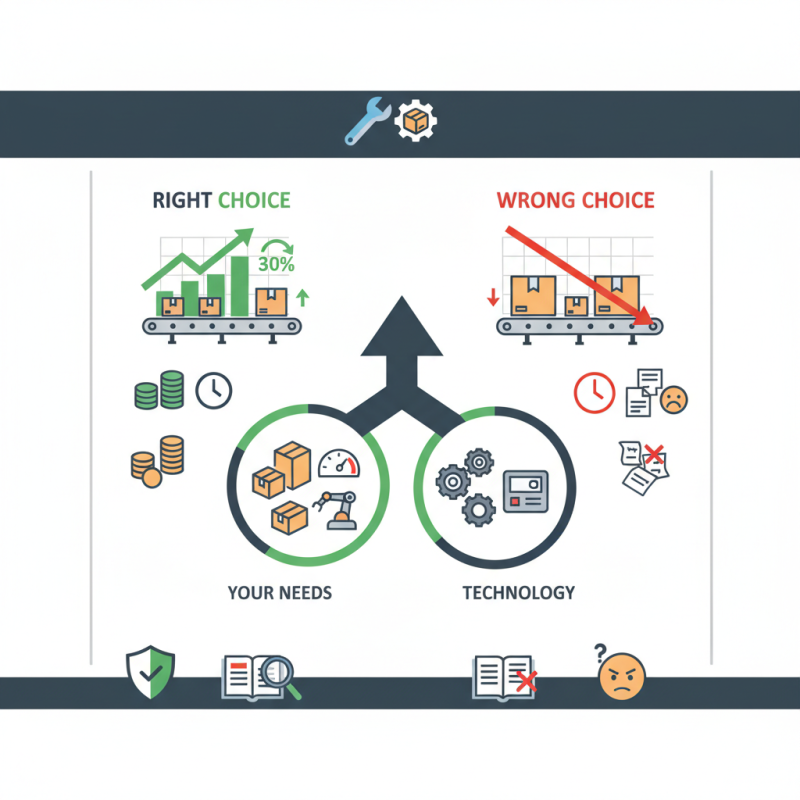
When selecting a case erector, the decision can significantly impact your production line efficiency. The right equipment streamlines operations and reduces labor costs. According to a recent report by the Packaging Machinery Manufacturers Institute, businesses that upgrade their case erecting solutions see up to a 30% rise in throughput. However, choosing the wrong case erector can lead to bottlenecks and increased downtime, which adversely affects overall productivity.
It's essential to evaluate your specific needs before making a choice. Factors like case size, production speed, and automation level matter. A well-chosen case erector can save you time and money, while a poor selection may cause frustrations and wasted resources. An industry analysis revealed that 20% of companies regretted their case erector choice within the first year. This indicates a need for careful consideration and reflection on your operational goals.
Investing in a case erector can be rewarding, but the process isn’t straightforward. Balancing your requirements with available technology is challenging. Understanding the core functions of different models can be overwhelming, yet essential. Too often, businesses neglect the importance of adequate research. The consequences can be substantial and long-lasting.
Understanding the Basics of Case Erectors and Their Functions
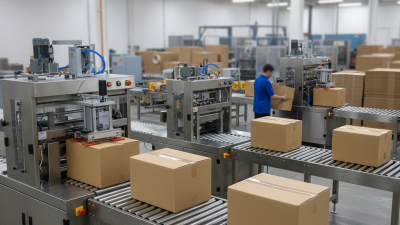
Case erectors are essential machines in packaging lines. They help automate the process of forming cardboard boxes. Understanding their basic functions is crucial for making the right choice. These machines create boxes from flat sheets, providing speed and efficiency. Manufacturers rely on them for consistent quality and reduced labor costs.
Choosing the right case erector involves several factors. Consider the size of the boxes you need and the speed required. Some machines handle various box sizes; others do not. It’s important to assess your production needs carefully. A specific model may not work for all situations. Additionally, while some erectors promise high production rates, they may require frequent maintenance. This can hinder workflow if not planned appropriately.
Another detail to reflect on is the ease of use. Some machines are complex and may need specialized training. This can impact the transition for your team. Evaluate the learning curve with each option you consider. Ultimately, the right case erector should balance speed, efficiency, and user-friendliness. Taking these aspects into account can lead to better long-term decisions in your packaging operations.
Identifying Your Production Needs and Volume Requirements
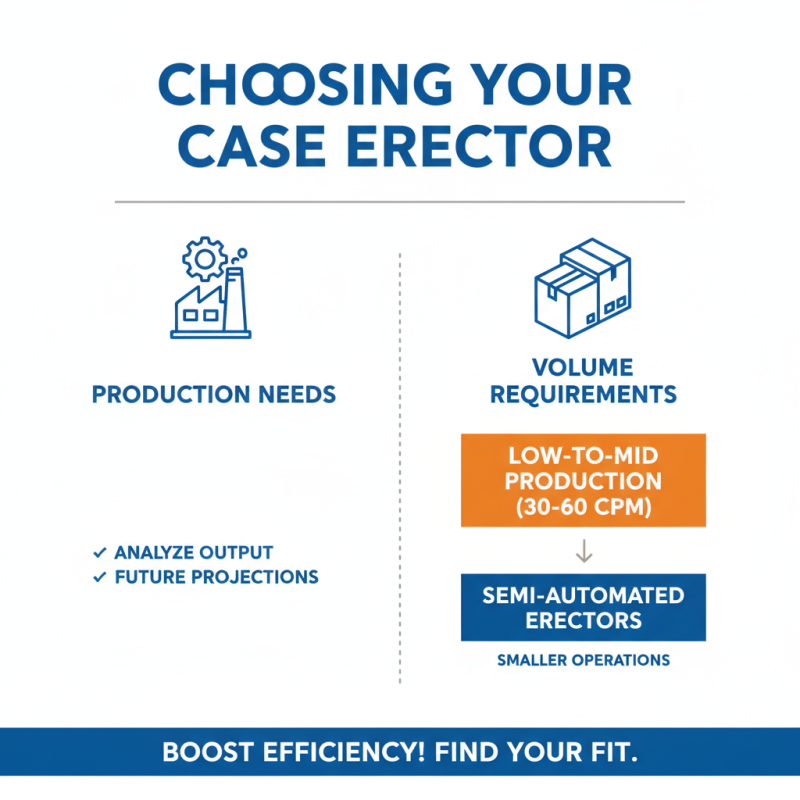
Choosing the right case erector involves understanding your production needs and volume requirements. It's crucial to analyze your current output and future projections. For instance, studies show that companies with low-to-mid production levels often benefit from semi-automated erectors. These systems can handle 30 to 60 cases per minute, making them well-suited for smaller operations.
On the other hand, companies processing large volumes should consider high-speed fully automated systems. Such units can exceed 120 cases per minute, drastically improving efficiency. However, these systems often come with increased maintenance and upfront costs. A report by the Packaging Machinery Manufacturers Institute indicates that over 40% of companies reported machinery downtime due to misalignment with production needs.
Investing in a case erector without proper assessment can lead to challenges. Companies risk overcapacity, which strains budgets and resources. Many also face underperformance issues due to misjudging volume requirements. Gathering data on your operation's historical performance is essential. Adjustments to production levels often reflect directly on machinery effectiveness. Aim for systems that can adapt as your business evolves.
Evaluating Different Case Erector Technologies and Features
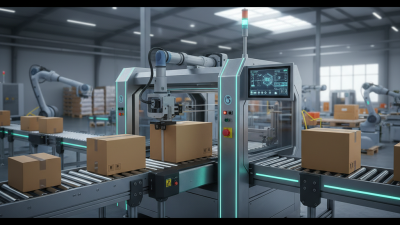
When evaluating different case erector technologies, it's crucial to consider the automation level. High automation can reduce labor costs but may require more complex maintenance. Simpler machines might be easier to fix but can slow down your production line. Understand your team's skill level; sometimes, less advanced technologies are more suitable for smaller operations.
Features such as speed and size versatility are also key. Some machines handle various box sizes seamlessly, which is a significant advantage. However, not all operators can manage such flexibility effectively. If your production demands change frequently, this adaptability becomes essential. Yet, it can lead to confusion in settings and might require continual training.
Energy efficiency is another aspect to think about. Machines that consume less power can lower operational costs. Still, these options may not always offer the best speed. Choosing the right balance between energy use and machine performance is a challenge. Each feature presents trade-offs that require careful consideration. Be sure to weigh these options based on your specific needs and production goals.
Assessing Space and Layout Considerations for Installation
When considering the installation of a case erector, assessing space and layout is crucial. According to industry reports, about 30% of projects face delays due to improper space planning. You must start by measuring the area where the machine will be placed. This should include not just the ground space, but also vertical clearance for machinery operations and maintenance.
Tip: Always leave extra room for future expansions. Even if your current needs are modest, growth is typical in the industry. Allocating about 20% of your floor space for potential equipment additions can prevent costly modifications later.
Think about workflow. Your case erector should align with other processes, like packing and shipping. Create a traffic pattern that enhances efficiency. Reports show that optimizing layout can increase productivity by up to 25%.
Tip: Involve your entire team in layout discussions. They can provide insights into potential bottlenecks or inefficiencies that may not be immediately apparent. The stakes are high—neglecting proper space assessment might lead to operational hiccups that affect the bottom line.
Analyzing Budget Constraints and Total Cost of Ownership
When considering a case erector, budget constraints play a pivotal role. A recent industry report highlighted that over 30% of companies cited budget limitations as a major concern in machinery investments. Understanding total cost of ownership (TCO) is critical. TCO includes not just the purchase price but also installation, maintenance, and operation costs. Neglecting these factors can lead to unexpected expenses down the road.
Choosing the right case erector goes beyond just upfront costs. For instance, operators may underestimate maintenance. According to a survey, nearly 25% of businesses had to spend double their initial budgets due to unforeseen maintenance needs. Furthermore, energy efficiency can significantly impact operational costs. An efficient model could reduce energy consumption by up to 20%, leading to savings over time. Reflecting on these aspects early on can prevent budget overruns and enhance ROI.