How to Identify Muscovite Mica in Your Rocks?
muscovite mica is a fascinating mineral that often captivates both geologists and rock enthusiasts. Dr. Jane Anderson, a renowned expert in mineralogy, states, "Identifying muscovite mica can open doors to understanding geological history." This quote emphasizes the importance of recognizing this mineral in rocks.
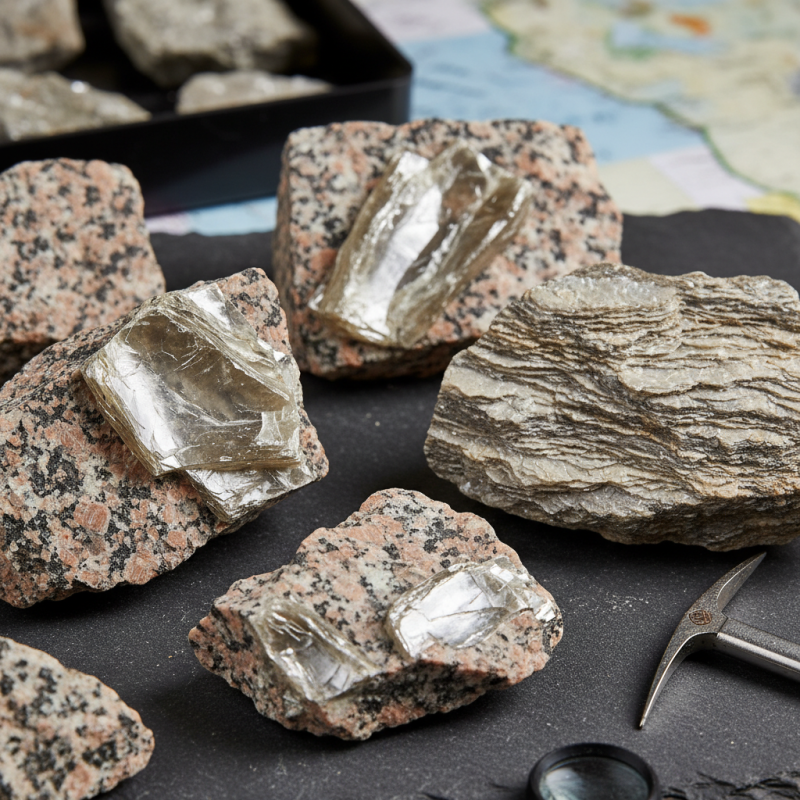
muscovite mica is usually characterized by its thin, sheet-like structure. It can appear transparent to slightly translucent. Many enthusiasts find it nestled among other minerals in granite or schist. The shiny luster of muscovite mica makes it stand out. Often, people confuse it with other micas, which can be misleading.
Understanding how to identify muscovite mica is essential. One technique involves examining its color and cleavage. While it often presents a light color, variations exist. Shiny flakes may catch your eye but require careful inspection. Identifying muscovite mica is not always straightforward, and sometimes mistakes happen. Each rock tells a story, and muscovite mica is a critical character in that narrative.
Identification of Muscovite Mica: Key Characteristics to Observe
Identifying muscovite mica can be an exciting yet challenging task. This mineral is known for its distinct characteristics. Its perfect basal cleavage allows it to split into thin, flexible sheets. The color ranges from colorless to shades of brown and green. A shiny, pearly luster often makes it stand out in rock samples.
Muscovite can also be identified by its transparency. It allows light to pass through. Many geology reports emphasize its transparent nature, which is crucial for differentiation. Low hardness on the Mohs scale, around 2-2.5, adds to its identification criteria. You can easily scratch muscovite with a fingernail. Some have noted that while examining, it may appear flaky and crumbly. These qualities can mislead inexperienced observers.
Pay attention to its association with other minerals. Muscovite often forms in granitic rocks and metamorphic environments. For instance, it frequently accompanies quartz and feldspar. This can complicate identification, especially in mixed samples. Testing your rock against reliable geological references can provide better confirmation. Not every sample will be clear-cut; experience teaches the subtleties of muscovite identification.
Common Locations and Geological Contexts for Muscovite Mica
Muscovite mica is a common mineral found in various geological settings. It often appears as glimmering, flaky crystals within igneous and metamorphic rocks. These rocks can include granites, schists, and gneisses. Knowing where to look can greatly enhance your chances of finding muscovite mica.
In terms of locations, muscovite mica is frequently discovered in regions with significant granite formations. Majestic mountain ranges can hold surprises. In the eastern United States, places like Vermont and New Hampshire are rich in muscovite. Furthermore, exploring metamorphic terrains, particularly those influenced by regional metamorphism, may yield specimens. Streams and riverbeds near these areas can expose mica flakes, making them accessible for collectors.
While searching for muscovite, it’s important to pay attention to the rock’s texture. The presence of sparkling, thin sheets can indicate muscovite. However, not every shiny mineral is mica. Some impostors can mislead inexperienced collectors. Take time to learn the differences. Examination under natural light can be vital. Often, the excitement of discovery can cloud judgment. Slow down and observe closely. There’s more to the hunt than just finding gemstones.
How to Identify Muscovite Mica in Your Rocks? - Common Locations and Geological Contexts for Muscovite Mica
| Location | Geological Context | Identification Tips |
| Granite Mountains, USA | Igneous rock formations | Look for shiny, flaky, and silver-colored sheets. |
| Schwarzwald, Germany | Metamorphic rocks, especially schist | Check for transparent to translucent layers. |
| Himalayas, India | Metamorphic and sedimentary rocks | Spot thin, flexible sheets that can be peeled off. |
| Bald Mountain, USA | Granite pegmatites | Identify strong cleavage planes and silver sheen. |
| Mont Saint-Hilaire, Canada | Alkaline intrusive rocks | Look for sparkling, glassy surfaces on flakes. |
Physical Properties of Muscovite Mica: Color, Luster, and Hardness
Muscovite mica is a common mineral found in many rocks. Its physical properties make it relatively easy to identify. The most notable feature is its color. Muscovite typically appears as a light shade, often ranging from silver-gray to pale yellow. Some specimens may have a brown tint, depending on impurities.
Luster adds to its charm. Muscovite exhibits a vitreous to pearly luster, giving it a shiny appearance. When you hold a piece, the light reflects beautifully off its surface. This reflects its unique layered structure. You may notice that muscovite has perfect cleavage. This means it can easily be split into thin, flexible sheets.
Tips: Look for the thin, flexible layers when examining a sample. If it flakes easily, it's likely muscovite. Also, consider the hardness. Muscovite is soft on the Mohs scale, rated around 2.5 to 3. You can scratch it with your fingernail. This softness can sometimes cause confusion with other minerals.
Muscovite has various uses, yet recognizing it can be tricky. Visual appeal may distract from accurate identification. Keep a detailed record of your findings as you study. Observing and documenting color and luster will enhance your knowledge.
Testing Techniques: Applying the Mohs Scale on Muscovite Mica
Identifying muscovite mica requires careful observation and testing techniques. One effective method utilizes the Mohs Scale of Hardness. This scale ranges from 1 (talc) to 10 (diamond). Muscovite ranks at about 2.5-3, indicating that it's relatively soft. Knowing this, you can scratch the mineral with a knife or another softer material to see if it leaves a mark.
When you conduct this test, be cautious. While muscovite can scratch easily, it might not show visible changes immediately. Use a steady hand and clear lighting. Remember, the presence of other minerals may affect your results. Some people might misidentify muscovite due to similar appearances. So, always confirm your findings with additional properties.
Tips: Always examine the mineral's color and layers. Muscovite typically exhibits a translucent quality with a shiny appearance. Keep in mind that environmental factors affect mica's structure and color. Quartz or feldspar may confuse you. Reflect on your results and don’t rush your identification process. After all, practice is key to mastering mineral identification.
Microscopic Examination: Using a Petrological Microscope for Identification
Microscopic examination is essential for identifying muscovite mica in rocks. A petrological microscope can reveal details invisible to the naked eye. When using this tool, you'll notice the sheet-like structures typical of mica. These structures can be very thin, often allowing light to pass through them. Adjusting the light source is key. You may need to experiment with different angles to highlight the mica's unique features.
Pay attention to the color and transparency. Muscovite appears in shades of light brown to colorless. Under the microscope, it may exhibit a pleochroism effect, changing color with different orientations. Look for perfect cleavage planes, which are characteristic of muscovite. Sometimes, this can be tricky. There might be impurities that alter its appearance.
It’s important to remain patient during your observations. Not every sample will yield clear results. Document your findings carefully to spot patterns over time. This process often requires both precision and introspection. Each experiment teaches you something new, even if the results aren’t always conclusive. Using a petrological microscope can be a rewarding journey into the world of minerals.
Distribution of Mica Types Found in Rocks
