Blog

2026 Best Type of Automatic Strapping Machine?

Choosing the right automatic strapping machine in 2026 requires more than comparing prices or motor power. The best option depends on package size, strap material, production speed, and workplace conditions. A compact polypropylene strapper may suit cartons in a warehouse. A steel strapping system may perform better around heavy pallets, coils, or construction materials. The details matter.

Dr. Jay Singh, a packaging automation specialist and professor in packaging technology, offers a useful principle: “Packaging performance depends on the complete system, not one machine alone.” This idea guides our comparison. We will examine arch, semi-automatic, fully automatic, and robotic strapping solutions through practical operating conditions. Expect discussion of cycle speed, tension control, sealing quality, conveyor integration, maintenance access, and operator safety. These features can look impressive on a specification sheet. They may disappoint on a busy production floor.

Real experience also exposes uncomfortable gaps. A machine rated for thirty cycles per minute may slow when cartons arrive unevenly. Dust can affect sensors. Poorly aligned packages can create loose straps, damaged corners, or repeated stoppages. I have seen buyers focus on throughput while overlooking spare-part availability and technician response time. That is a costly mistake. Sometimes, the “best” automatic strapping machine is not the fastest model. It is the one that works consistently at your actual line speed, with your actual products, every working day.

2026 Best Type of Automatic Strapping Machine?

Types of Automatic Strapping Machines in 2026

Types of Automatic Strapping Machines in 2026

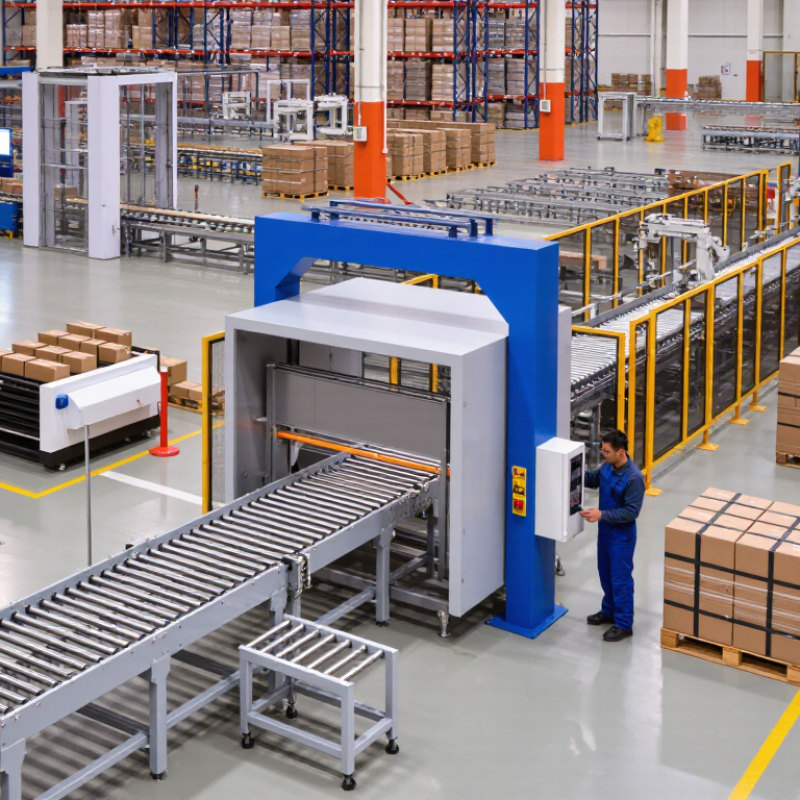
Automatic strapping machines now serve different packaging rhythms, not one universal workflow. Arch-type machines suit cartons moving continuously on conveyors. They apply polypropylene strap quickly around stable boxes. Side-seal models place the sealing head beside the package. They work well with dusty products or low-height cartons. Top-seal machines are useful when the strap must avoid a wet or uneven floor.

Horizontal and vertical machines solve different handling problems. Horizontal systems wrap large bundles, such as timber or stacked panels. Vertical systems compress cartons from above and secure them to pallets. Robotic strapping cells combine conveyors, sensors, and multiple heads. They fit high-volume lines with changing package sizes. However, they require more floor space and stronger integration skills.

Industry data supports this automation shift. The International Federation of Robotics reported 541,302 industrial robots installed worldwide in 2023, a 10% annual increase. That figure is not specific to strapping, but it shows the wider factory direction. PMMI’s 2024 packaging-industry research also identifies labor shortages and automation as continuing investment drivers. In practice, sensor accuracy, strap tension control, and maintenance access matter more than headline speed. A machine rated for 60 straps per minute may perform poorly with unstable cartons. That is the uncomfortable part. The fastest option is not always the best option. Buyers should test real packages, measure downtime, and review spare-part access before choosing a machine type.

How Automatic Strapping Machines Work

Automatic strapping machines secure packages with a controlled sequence of mechanical and electronic actions. An operator places a carton on the conveyor or table. A sensor detects its position and starts the cycle. The machine feeds polypropylene or polyester strap around the load, guides it through a channel, and pulls it to a programmed tension.

A tension motor then tightens the strap against the carton. A sealing unit joins the strap by heat, friction, or a metal-free weld, depending on the machine design. The cutter removes the remaining strap, and the system resets for the next package. It looks simple from outside.

In practical use, alignment matters more than many buyers expect. A tilted carton can produce loose corners, uneven pressure, or a failed seal. Dust on sensors may also cause missed cycles. I have found that operators often increase tension to solve weak packaging, but that can crush soft boxes instead. Regular cleaning, correct strap width, and careful tension testing usually improve reliability. Automatic does not mean maintenance-free. Different loads need different settings, and one universal “best” machine is rarely the best fit for every packing line.

Key Features for Comparing Strapping Machine Types

2026 Best Type of Automatic Strapping Machine?

The best automatic strapping machine depends on your packaging line, product size, and daily volume. Full-automatic models suit stable, high-speed operations with conveyor integration. Semi-automatic machines offer more flexibility for irregular cartons and changing workloads.

Compare the key features carefully. Check strap width, tension range, sealing method, and cycle speed. A narrow strap may suit light cartons, while heavier loads need stronger material and consistent tension. Measure the arch opening before purchase. A tight opening can slow production and damage oversized packages. Also inspect conveyor height, sensor response, emergency controls, and access to the sealing unit. Operators notice these details every shift. Maintenance matters more than impressive speed claims. A fast machine that stops frequently is not efficient.

Tips: Test several real cartons before choosing. Watch the strap around sharp corners. Listen for unusual motor noise. Ask whether common wear parts are easy to replace. Record cycle time during a full production hour, not only during a demonstration. This reveals heat buildup and feeding problems. One overlooked issue is operator ergonomics. Reaching, bending, and repeated adjustments can reduce output. The “best” type may still need a better layout, clearer training, or a slower setting. That is worth reconsidering.

Best Automatic Strapping Machine for Different Industries

Choosing the best automatic strapping machine depends on the industry, package shape, and line speed. Food producers often need hygienic stainless-steel frames, corrosion resistance, and fast cycle times. A top-press model stabilizes cartons before strapping. This helps prevent crushed boxes during cold-chain transport. Healthcare packaging needs clean operation, accurate tension, and traceable settings. Excessive tension can damage delicate cartons.

Warehouses and e-commerce operations usually benefit from arch-type machines with automatic feeding and adjustable strap placement. Logistics volumes are rising, while labor remains difficult to secure. The International Federation of Robotics reported 541,302 new industrial robots worldwide in 2023. This figure supports continued investment in practical automation. Heavy manufacturing requires stronger PET or steel strap systems. Side-seal designs can handle dusty environments better than exposed top mechanisms. Smithers valued the global packaging market at approximately US$1.2 trillion in 2023, with further growth forecast through 2028. Demand is not identical across sectors.

Tips: Test the heaviest carton first. Measure real cycle times, not brochure speeds. Check strap width, tension range, maintenance access, and spare-part availability. I have seen buyers focus on speed and overlook alignment problems. That mistake becomes expensive. No machine is perfect. A short production trial may reveal vibration, inconsistent seals, or awkward operator access. Choose equipment that fits the complete line, not only the strapping station.

2026 Best Type of Automatic Strapping Machine? – Best Automatic Strapping Machine for Different Industries
Automatic Strapping Machine Type Best-Fit Industries Typical Strap Material Typical Strap Width Typical Throughput Typical Tension Capability Recommended Load Profile Automation and Integration Main Advantages Important Selection Considerations
Fully Automatic PP Arch Strapper Food processing, e-commerce, general packaging, consumer goods and carton distribution Polypropylene (PP) 5–16 mm Up to approximately 30–60 straps per minute, depending on package size and machine layout Light to medium tension, commonly up to approximately 80 kgf Uniform cartons and packages with relatively stable dimensions Can be installed in conveyor lines and linked with weighing, labeling and case-packing equipment Low operating cost, fast cycling and suitable for high-volume carton packaging PP is generally unsuitable for very heavy, sharp-edged or outdoor loads that require high residual tension
Fully Automatic PET Arch Strapper Building materials, beverage distribution, brick and tile, timber and heavy carton packaging Polyester (PET) 9–19 mm Approximately 20–45 straps per minute, depending on tension, package size and conveyor speed Medium to high tension, commonly up to approximately 250–400 kgf Heavy or semi-rigid bundles requiring stronger restraint than PP provides Suitable for conveyorized lines and automatic bundle positioning systems Higher tensile strength and better resistance to shock loads than PP, with no rusting Requires correct strap alignment and tension control to prevent package deformation or strap damage
Automatic Steel Strapping Machine Steel service centers, metal products, pipes, construction materials and high-density industrial loads Steel strap 13–32 mm Approximately 8–25 straps per minute, depending on joint method and load configuration High tension; selected according to strap grade, width and load requirements Extremely heavy, hot, abrasive or sharp-edged products Can be integrated with conveyors, roller tables, weighing systems and automated positioning equipment Excellent resistance to heat, cutting and impact; suitable for demanding industrial loads Higher equipment and consumable costs; requires guarding and operator protection from sharp strap edges
Automatic Vertical Baler with Strapping Recycling centers, paper and cardboard recovery, retail distribution and waste-management operations PP or PET, depending on bale density and material type 9–19 mm Typically 3–12 bales per hour, depending on bale size, material and compression cycle Medium to high tension, selected for bale stability Compressed cardboard, paper, plastic film and other recyclable materials May include automatic strap feeding, welding or heat sealing, and programmable bale cycles Reduces material volume and produces stable bales for storage and transport Cycle time depends heavily on moisture, material density, contamination and loading method
Automatic Horizontal Baler with Multi-Strap System Large recycling plants, corrugated-board production, waste-processing facilities and fiber mills PP, PET or steel, depending on bale density and end-use requirements 9–19 mm for polymer strap; wider steel strap may be used for specialized heavy bales Approximately 10–40 bales per hour, depending on press size and material flow Medium to very high tension, depending on the strapping configuration Large, continuous-flow bales requiring multiple straps Designed for conveyor feeding, automatic compression, bale tying and discharge systems High productivity and reduced manual handling in continuous recycling operations Needs substantial floor space, reliable material feeding and regular maintenance of the compression system
Automatic Side-Seal Strapper Dusty or humid environments, food packaging, frozen products, corrugated cartons and low-clearance lines PP or PET 5–16 mm Approximately 20–50 straps per minute, depending on package dimensions Light to medium tension Cartons or bundles that may shed dust or require the strapping head to be positioned away from the top surface Can be combined with powered conveyors, corner alignment systems and automatic product detection Protects the strapping head from some product debris and accommodates restricted top access Requires adequate side clearance and careful adjustment for irregular or unstable packages
Automatic Four-Side Compression Strapper Corrugated case packing, printing, paper products, tissue, mail-order fulfillment and carton consolidation PP 5–12 mm Approximately 15–35 straps per minute, depending on compression and package format Low to medium tension with controlled compression Lightweight cartons, printed products and packages that need edge alignment before strapping Integrates with conveyor lines, bundling equipment and automatic carton counting systems Improves bundle shape and reduces movement during handling and shipping Compression settings must match product strength to avoid crushing cartons or deforming soft goods
Automatic Coil and Bundle Strapper Wire and cable, metal profiles, tubes, plastic pipe, timber and rolled products Steel, PET or PP, selected according to product weight and surface condition 9–19 mm for polymer strap; 13–32 mm for many steel-strapping applications Approximately 5–20 strapping cycles per minute, depending on bundle geometry and positioning Medium to high tension Round, cylindrical, long or irregular bundles that require controlled positioning Can use sensors, rotating tables, bundle clamps and programmable strap-spacing systems Provides repeatable strap placement on products that are difficult to stabilize manually Correct bundle support, strap protection and product centering are essential for reliable operation
Robotic Automatic Strapping Cell Automotive components, appliances, warehouse logistics, palletized goods and mixed-SKU production PP, PET or steel, depending on the load and required tension 5–19 mm for polymer strap; wider sizes may be used for steel applications Approximately 10–30 pallets or packages per hour, depending on the robot path and number of straps Programmable from light to high tension, subject to the strapping head specification Variable package sizes, pallet loads and production runs requiring flexible automation Integrates with robots, vision systems, pallet conveyors, barcode readers and warehouse-control systems Flexible format handling and reduced manual intervention across mixed product lines Requires higher initial investment, safety guarding, programming and coordinated upstream material flow
Selection note: The stated speed, strap width and tension values are typical industry ranges rather than universal specifications. Actual performance depends on package dimensions, strap grade, joint method, conveyor speed, load stability, environmental conditions and the machine configuration. For heavy, sharp-edged or high-temperature loads, PET or steel strap is generally more appropriate than PP.

How to Choose the Right Automatic Strapping Machine in 2026

2026 Best Type of Automatic Strapping Machine?

How to Choose the Right Automatic Strapping Machine in 2026

Choosing the right automatic strapping machine starts with the package, not the machine catalog. Measure package length, width, height, weight, and surface stability during normal production. A compact arch machine suits uniform cartons moving through a conveyor. Larger or unstable loads may require vertical or horizontal strapping equipment.

Check the required strap material before comparing cycle speed. Polypropylene suits many light cartons, while polyester offers stronger retention for heavier loads. Confirm the machine’s tension range, sealing method, strap width, and adjustment accuracy. Excessive tension can crush soft boxes. Insufficient tension allows loads to shift. It happens.

In real factory evaluations, I also inspect conveyor height, available floor space, noise, guarding, and access for cleaning. A fast machine is not useful if operators cannot safely clear a jam. Ask for documented cycle tests using your actual package sizes. Review electrical requirements, spare-part availability, training, and maintenance intervals. Measure twice. Budget for downtime, not only the purchase price. Some buyers focus heavily on speed and later discover that poor carton alignment causes frequent strap failures. That assumption deserves questioning. A reliable choice balances output, load security, operator safety, energy use, and future production changes.