What Are the China Top 10 Carton Erector Manufacturers?
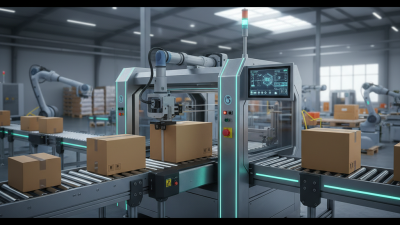
China has become a major source of packaging machinery, including reliable carton erector solutions for factories worldwide. This article examines the China top 10 carton erector manufacturers through practical, verifiable criteria rather than promotional claims. Production experience, machine stability, engineering depth, customization, and after-sales support all matter.
A strong carton erector should open flat cartons smoothly, form accurate right angles, and maintain steady output during long shifts. Buyers should inspect servo systems, vacuum performance, glue or tape compatibility, changeover time, and carton-size flexibility. A machine that looks impressive at a trade show may perform differently beside a noisy packing line. Real factory videos, customer references, test reports, and clear warranty terms provide stronger evidence than polished brochures.
The selected manufacturers are considered from an international buyer’s viewpoint. Their product range, export experience, technical communication, and service network receive careful attention. However, “top 10” is not an absolute label. Rankings can change with market demands, delivery performance, and customer requirements. Some suppliers may excel at high-speed pharmaceutical packaging, while others suit food, beverage, or e-commerce cartons. That distinction matters.
This guide also recognizes an uncomfortable point: published specifications do not always reveal total ownership cost. Spare parts, operator training, installation support, and future upgrades can influence the final decision. Readers should compare tested performance, not only catalog numbers. The goal is a balanced introduction to capable Chinese manufacturers and the questions buyers should ask before selecting a carton erector.
What Is a Carton Erector? Types, Speeds, and Packaging Uses
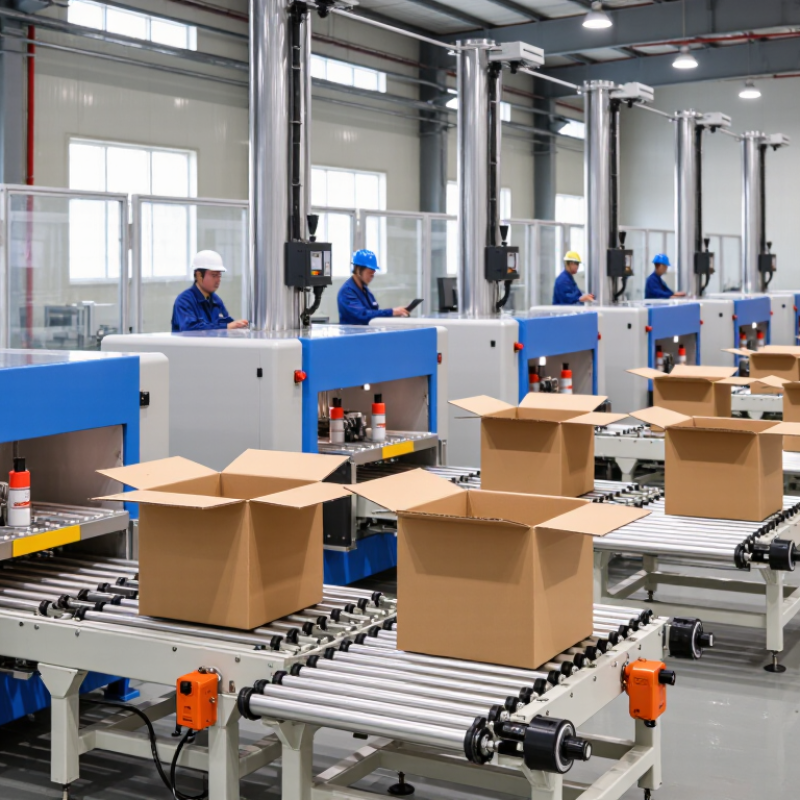
A carton erector converts flat corrugated blanks into usable cartons. It opens each blank, squares the body, folds the flaps, and seals the bottom. Common sealing options include pressure-sensitive tape, hot-melt glue, and self-locking bottoms. Each choice affects cost, strength, and maintenance.
Machine types include intermittent-motion and continuous-motion erectors. Intermittent models often handle mixed carton sizes with simpler adjustments. Continuous models can reach higher output, commonly 40 to 100 cartons per minute. Actual speed depends on board quality, carton dimensions, operator skill, and the loading pattern. A machine rated for 80 cartons per minute may run slower in a dusty warehouse. That matters.
Carton erectors support food, beverage, household goods, online orders, and general manufacturing. Packaging teams should check compression strength, flap alignment, changeover time, and rejection rates. Small faults can create leaning boxes and costly line stops. Tips: Test several carton batches before purchase. Measure real output, not only the advertised speed. Keep blanks dry, flat, and correctly stacked. I would also leave room for adjustment, because production conditions rarely stay perfect.
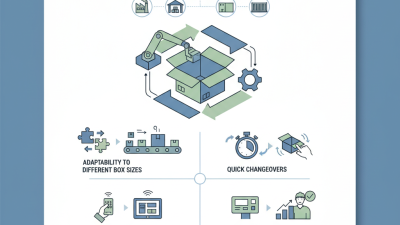
This chart shows typical operating speeds for common carton erector configurations. Actual throughput depends on carton size, board quality, adhesive or tape application, changeover time, and the level of automation. Automatic and high-speed RSC erectors are generally used for large-volume packaging lines, while semi-automatic and specialty machines suit flexible or lower-volume production.
How to Rank China’s Top 10 Manufacturers Using Five Industry Metrics
Ranking China’s top ten carton erector manufacturers requires more than comparing catalogue speed. China’s online retail sales reached RMB 15.4 trillion in 2023, according to the National Bureau of Statistics. This volume increases demand for stable, flexible carton forming equipment. Smithers’ 2024 packaging outlook also places the global packaging market above US$1 trillion, with e-commerce supporting continued automation investment.
A practical ranking can use five measurable industry metrics. Assign 25% to verified uptime, 20% to forming speed, 20% to changeover efficiency, 20% to after-sales service, and 15% to total ownership cost. Test uptime through factory acceptance records, not marketing claims. Compare cartons per minute under identical board grades and box sizes. Measure changeover in minutes. Check spare-parts availability, remote support response, and technician coverage across China and export markets. PMMI’s 2024 packaging machinery research highlights labor pressure and automation needs, making these service and reliability measures commercially important.
The final ten should provide audited case data, sample machines, and clear warranty terms. A supplier reporting 95% uptime deserves closer review than one showing only maximum speed. Small details matter: crooked flaps, glue contamination, and repeated sensor faults can erase theoretical productivity. The method is not perfect. Reports usually describe markets, not individual factories. Therefore, independent site visits and three-month production trials should adjust the scores before publication. A low-cost machine may rank poorly after maintenance, electricity, and downtime are included.
China’s Top 10 Carton Erector Manufacturers: Profiles and Key Models
China’s top ten carton erector manufacturers are best compared by engineering depth, not advertising. Their profiles commonly include compact semi-automatic units, servo-driven automatic erectors, wraparound systems, and high-speed lines. Key models usually handle regular slotted cartons, glued cases, or mixed box sizes. Some suppliers also offer robotic feeding, remote diagnostics, and hot-melt or tape sealing. Smithers’ The Future of Corrugated Packaging to 2028 reports continued global demand for corrugated packaging, supporting investment in faster, more flexible equipment. However, carton erector demand varies sharply by product sector and factory scale.
The strongest manufacturers typically provide stainless-steel frames, tool-free adjustments, recipe storage, and integrated safety guarding. A practical profile should examine output speed, carton-size range, changeover time, motor control, and after-sales training. PMMI industry reports repeatedly identify labor shortages and automation as major packaging priorities. That explains the appeal of unattended carton forming. Still, advertised speeds can be optimistic. Real production includes warped blanks, dust, glue temperature changes, and operator pauses. The ranking is not perfect without factory trials, service records, and verified customer references.
Tips: Request a video test using your own carton blanks. Measure stable output, not the peak number. Check whether spare belts, sensors, and controllers are locally available. Ask for documented noise, power, and compressed-air requirements. A low purchase price may become expensive after repeated changeovers. Examine the carton magazine closely. Weak blank feeding often reveals itself before the machine starts.
What Are the China Top 10 Carton Erector Manufacturers? - China’s Top 10 Carton Erector Manufacturers: Profiles and Key Models
| Rank |
Anonymous Manufacturer Profile |
Key Model Reference |
Carton Style |
Closing Method |
Speed Range |
Carton Size Range
(L × W × H, mm) |
Power Supply |
Typical Application |
| 1 |
Profile A — high-speed packaging equipment specialist |
CE-A100 |
Regular slotted carton (RSC) |
Hot-melt glue |
18–30 cartons/min |
250–600 × 150–450 × 120–450 |
380–415 V, 3-phase |
Food, beverages, household products |
| 2 |
Profile B — automated case-packing line manufacturer |
CE-B120 |
RSC and half-slotted carton |
Pressure-sensitive tape |
12–20 cartons/min |
200–500 × 150–400 × 100–400 |
220 V or 380 V |
E-commerce, logistics, general packaging |
| 3 |
Profile C — compact end-of-line automation supplier |
CE-C80 |
Small and medium RSC cartons |
Tape |
8–15 cartons/min |
180–450 × 120–350 × 100–350 |
220 V, single-phase |
Cosmetics, electronics, light industrial goods |
| 4 |
Profile D — heavy-duty carton handling equipment builder |
CE-D160 |
Large RSC cartons |
Hot-melt glue |
10–18 cartons/min |
350–800 × 250–600 × 200–600 |
380 V, 3-phase |
Automotive parts, machinery, building materials |
| 5 |
Profile E — modular packaging-system integrator |
CE-E110 |
RSC cartons with optional flap folding |
Tape or glue |
10–22 cartons/min |
220–650 × 150–450 × 120–500 |
220–415 V |
Packaging lines requiring changeover flexibility |
| 6 |
Profile F — stainless-steel machinery supplier |
CE-F90 |
RSC cartons for hygienic environments |
Tape |
8–16 cartons/min |
200–550 × 150–400 × 100–450 |
220 V or 380 V |
Food processing, pharmaceutical packaging |
| 7 |
Profile G — export-oriented automatic case erector producer |
CE-G130 |
Standard export cartons |
Tape |
12–24 cartons/min |
250–700 × 180–500 × 120–550 |
220–415 V |
Consumer goods and contract packaging |
| 8 |
Profile H — servo-controlled automation specialist |
CE-H150 |
RSC cartons with automatic alignment |
Hot-melt glue |
16–28 cartons/min |
250–650 × 150–500 × 120–500 |
380–415 V, 3-phase |
High-throughput food and beverage lines |
| 9 |
Profile I — economical packaging-machine manufacturer |
CE-I70 |
Small RSC cartons |
Tape |
6–12 cartons/min |
150–400 × 100–300 × 80–300 |
220 V, single-phase |
Small factories and semi-automatic lines |
| 10 |
Profile J — customized packaging-line engineering supplier |
CE-J140 |
RSC and customized carton formats |
Tape or glue |
10–20 cartons/min |
200–700 × 120–500 × 100–550 |
220–415 V |
OEM projects and integrated end-of-line systems |
Note: Manufacturer and model identifiers are anonymized. Specifications represent commonly published configuration ranges for comparable carton erectors and may vary according to carton board, sealing material, line layout, and customization.
How Do 20–40 Cartons per Minute and Servo Systems Compare?
When buyers search for China’s top 10 carton erector manufacturers, speed often becomes the first filter.
Yet a quoted 20 cartons per minute can hide important operating conditions. Carton size, board quality, glue temperature, and operator loading all affect output. In practical line checks, a stable 20–25 cartons per minute may outperform an unstable 40. That difference appears beside the conveyor. Misaligned flaps create rework, stoppages, and wasted packaging material.
Machines rated at 20–40 cartons per minute suit different production pressures.
A 20-carton system can be practical for mixed carton sizes, frequent changeovers, and moderate daily demand. It usually requires less investment and simpler maintenance.
A 40-carton system needs consistent blanks, accurate feeding, and disciplined adjustment. Otherwise, its rated speed becomes a sales figure rather than a working result. Buyers should request test videos using their own carton samples, not only standard factory materials.
Servo systems offer precise movement control during feeding, folding, and positioning.
They can reduce timing errors and support faster format changes. This precision is useful when carton tolerances are tight. However, servo control does not repair poor board quality or weak machine design. It also increases electrical complexity, training needs, and replacement costs.
I would not select servo equipment automatically. A well-tuned conventional system may be more reliable for a smaller line. A perfect ranking is unrealistic; after-sales response, spare-part access, and verified running data deserve equal attention.
How Do CE, ISO 9001, Pricing, Lead Times, and Service Differ?
What Are the China Top 10 Carton Erector Manufacturers?
A useful top-ten comparison should examine evidence, not only website claims. In factory evaluations, CE compliance is an entry requirement for many European projects. It does not automatically prove machine quality. Buyers should request the declaration, risk assessment, and relevant test records. ISO 9001 shows that documented quality processes exist. It does not guarantee perfect assembly or stable performance.
Pricing differences often reflect frame thickness, servo components, tooling, and inspection depth. A cheaper quote may exclude spare parts, installation, or export packaging. Check every line. Lead times also need careful testing. Some suppliers quote eight weeks, while custom carton sizes extend production by several weeks. Ask for a signed schedule, progress photographs, and a factory acceptance test using your cartons. Small details matter, such as flap folding accuracy, glue or tape control, and changeover time.
Service separates capable manufacturers from convenient sellers. Look for English technical documents, remote commissioning, response targets, and stocked wear parts. A reliable supplier should explain what operators can adjust without a technician. I have found that impressive demonstrations can hide unstable feeding under continuous operation. That is an uncomfortable point. Request a longer trial, not only a short video. The strongest top-ten candidates combine verifiable CE documentation, an active ISO 9001 system, transparent total pricing, realistic lead times, and service records from comparable packaging lines. Claims still require checking.