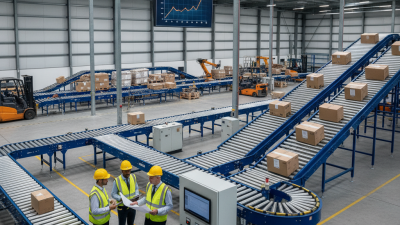
A belt conveyor is rarely just a moving belt. It is a carefully matched system of pulleys, idlers, drives, frames, and controls. Global buyers use these systems in warehouses, ports, mines, food plants, and distribution centers. Each site creates different demands. Dust, moisture, heat, incline, product weight, and cleaning routines can change the correct design.
Market reports show why this equipment deserves closer evaluation. Grand View Research has identified steady growth in the global conveyor systems market, supported by e-commerce, manufacturing automation, and expanding logistics networks. MarketsandMarkets has also forecast continued growth for belt conveyor applications, particularly in mining, airports, and material handling. These reports indicate demand, but they do not select the right machine for every project.
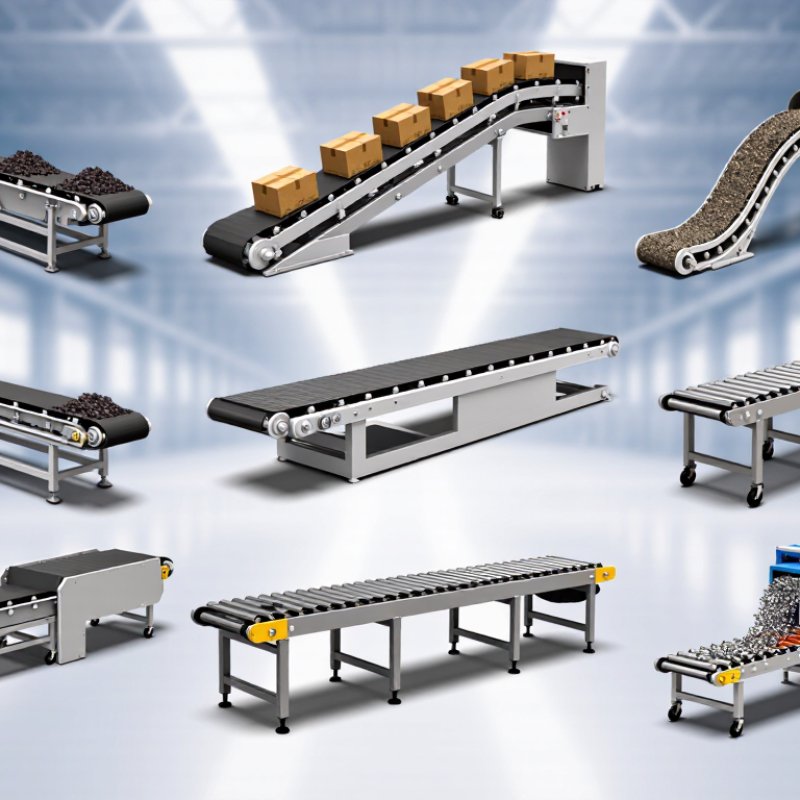
This guide examines ten important belt conveyor types for international buyers. The list includes troughed, flat, cleated, curved, pipe, slider-bed, roller-bed, wire-mesh, magnetic, and portable conveyors. Each design solves a different handling problem. A troughed belt may carry bulk ore across long distances. A cleated belt can move cartons up a steep incline. A wire-mesh belt may suit high-temperature processing.
Performance must be verified, not assumed. CEMA guidance and ISO 5048 provide useful engineering references for capacity, power, and loading calculations. Yet specifications alone are insufficient. Belt speed, transfer-point design, maintenance access, spare parts, and local service support also affect ownership costs. No universal ranking exists. That limitation matters. The best choice depends on the material, route, environment, safety expectations, and realistic operating experience.
Top 10 Types of Belt Conveyor for Global Buyers
Belt conveyors move materials continuously across factories, warehouses, ports, and processing sites. Their basic system includes a belt, drive pulley, tail pulley, idlers, frame, and tensioning device. The belt carries the load, while the drive unit controls speed and direction. Simple in theory. Selection is not.
Common types include flat belt, troughed belt, cleated belt, incline, decline, curved, telescopic, pipe, magnetic, and sanitary conveyors. Classification depends on material, capacity, distance, incline angle, belt width, and working environment. Bulk sand may need a troughed belt with strong impact protection. Small cartons often require a flat belt. Sticky or wet materials can expose weak design choices quickly.
Tips: Check the material’s size, moisture, temperature, and abrasiveness. Measure the required throughput, not the hoped-for throughput. Confirm local electrical and guarding requirements before ordering. In field evaluations, I have seen buyers focus on belt length while overlooking transfer points and cleaning access. That mistake increases maintenance time. Another imperfect assumption is that faster always means better. Excessive speed may cause dust, spillage, noise, or product damage. A reliable specification should include emergency stops, skirt sealing, accessible rollers, and realistic loading conditions. Ask for performance data from comparable applications. Test results matter more than attractive claims.
| No. | Conveyor Type | Primary Classification Criterion | Typical Materials | Typical Incline Range* | Typical Belt Speed* | Typical Capacity* | Main Advantages | Common Applications |
|---|---|---|---|---|---|---|---|---|
| 1 | Troughed Belt Conveyor | Carrying rollers form a trough, commonly using three or five idler rolls. | Coal, ore, aggregates, grain, fertilizer, wood chips | Up to about 18° for many bulk materials | 0.8–5.0 m/s | 100–10,000 t/h | High carrying capacity, good load retention, suitable for long distances | Mining, quarrying, ports, power plants, cement and bulk terminals |
| 2 | Flat Belt Conveyor | A flat belt runs on a slider bed or flat carrying idlers. | Cartons, parcels, packaged goods, components, light bulk materials | Usually 0–10° | 0.2–2.5 m/s | Typically 50–500 t/h | Simple layout, economical installation, easy loading and unloading | Warehousing, distribution, assembly, packaging and general material handling |
| 3 | Cleated Belt Conveyor | Raised transverse cleats divide the belt into compartments. | Boxes, bags, agricultural products, granules, bulk solids | Up to about 25° depending on cleat design and material | 0.3–2.0 m/s | 20–400 t/h | Controls product spacing and reduces rollback on inclines | Food processing, agriculture, recycling, packaging and inclined transfer lines |
| 4 | Sidewall Belt Conveyor | Corrugated sidewalls combined with cleats create a high-capacity pocketed belt. | Sand, gravel, coal, fertilizer, wood pellets, minerals | Up to about 75°; vertical designs are possible | 0.5–3.0 m/s | 50–2,000 t/h | Handles steep elevation changes while saving floor space | Compact plants, ship loading, mining, recycling and steep transfer systems |
| 5 | Pipe Belt Conveyor | The belt is formed into a closed pipe around the conveyed material. | Coal, limestone, clinker, ash, concentrates, environmentally sensitive bulk solids | Generally up to 15°–18°; design-dependent | 1.0–5.0 m/s | 100–4,000 t/h | Enclosed conveying, reduced spillage, protection from wind and contamination | Power, cement, ports, chemical plants and routes near sensitive environments |
| 6 | Reversible Belt Conveyor | The drive permits belt movement in both forward and reverse directions. | Bulk solids, cartons, pallets, aggregates and storage materials | Usually 0–10° | 0.3–3.0 m/s | 50–1,500 t/h | Feeds multiple destinations and reduces the need for separate return conveyors | Storage tunnels, batching systems, reclaim areas and loading platforms |
| 7 | Shuttle Belt Conveyor | A mobile conveyor travels along rails to distribute material across a storage area. | Grain, coal, fertilizer, aggregates, biomass and other bulk solids | Usually 0–8° | 0.5–3.5 m/s | 100–3,000 t/h | Flexible discharge points, improved stockpile formation and efficient space use | Warehouses, stockyards, grain storage, ship loading and bulk storage facilities |
| 8 | Magnetic Belt Conveyor | Permanent magnets or magnetic assemblies beneath the belt attract ferrous items. | Steel parts, ferrous scrap, stamped components, metal-contaminated materials | Up to about 45° for suitable ferrous parts | 0.1–1.5 m/s | 5–100 t/h | Prevents ferrous parts from sliding or falling and supports metal separation | Metalworking, recycling, stamping lines and parts handling |
| 9 | Roller-Bed Belt Conveyor | The belt is supported by closely spaced rollers to reduce friction under heavy loads. | Pallets, heavy cartons, drums, containers and unit loads | Usually 0–5° | 0.2–1.5 m/s | Up to about 150 kg/m of conveyor; system-dependent | Supports heavier loads with lower belt friction than a solid slider bed | Distribution centers, pallet handling, manufacturing and logistics facilities |
| 10 | Wire-Mesh Belt Conveyor | A metal mesh belt provides open area for airflow, drainage and heat transfer. | Baked goods, washed produce, metal parts, coated products and hot components | Usually 0–15° | 0.05–1.0 m/s | 5–200 kg/m of conveyor; process-dependent | Allows washing, drying, cooling, heating and drainage through the belt | Food processing, heat treatment, coating lines, washing and drying systems |
*The operating ranges are indicative engineering values rather than universal limits. Actual selection depends on material bulk density, lump size, moisture, abrasiveness, belt width, conveyor length, loading method, incline, ambient conditions and applicable safety standards.