Blog

Why Use a Wrapping Machine?

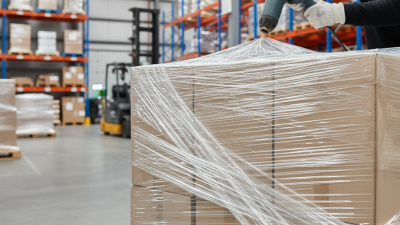
A wrapping machine earns its place when packaging work becomes repetitive, time-sensitive, or difficult to keep consistent by hand. It applies stretch or shrink film around products or pallet loads, helping hold cartons steady during storage and transport. The practical difference can be seen on a busy loading floor: fewer loose film tails, more uniform loads, and less time spent circling a pallet with a hand dispenser. Results still depend on correct settings, suitable film, and routine maintenance.

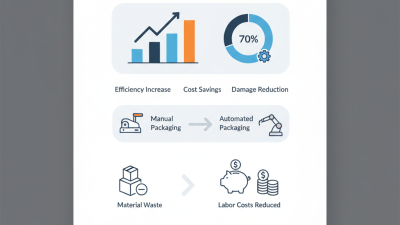
The scale of the sector is significant. PMMI’s 2023 State of the Industry report estimated U.S. packaging machinery shipments at about $10.5 billion in 2022. That figure covers packaging machinery broadly, not wrapping machines alone, but it shows the investment manufacturers make in reliable packaging operations. For a plant, the decision is more specific: compare current labor time, film consumption, load damage, and output requirements with the machine’s purchase and upkeep costs. A simple time study can reveal whether automation pays off.

Not every operation needs one. Small, irregular batches may be easier to wrap manually, and a poorly configured machine can waste film or create unstable loads. That matters. The strongest case for a wrapping machine is measurable: consistent application, safer handling practices, and dependable throughput suited to the product. Operators still need training, and performance should be checked against real production data. A machine helps; it does not fix every process problem.
Why Use a Wrapping Machine?

What a Wrapping Machine Does: Applying Film at 200–300% Pre-Stretch

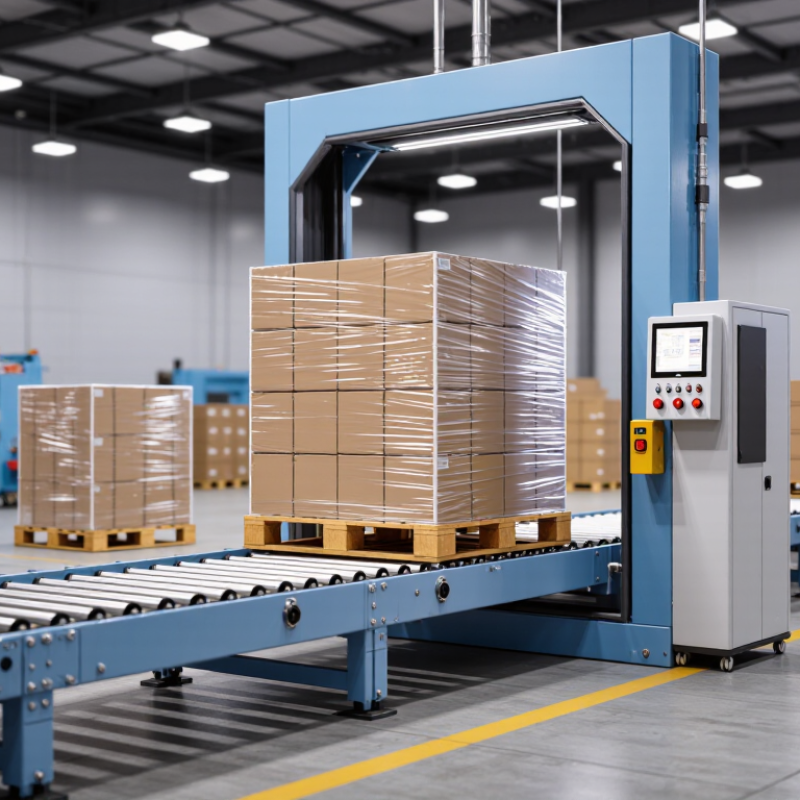
A wrapping machine feeds stretch film around a pallet while controlling film tension, overlap, and rotation. Its pre-stretch rollers extend the film before it reaches the load. At 200–300% pre-stretch, film is typically elongated to about three or four times its original length. Check the machine’s display conventions, since some systems show a ratio instead of percentage elongation.

This controlled stretch can help hold cartons together while using less film than wrapping with little or no pre-stretch. The result depends on the film grade, pallet shape, load weight, and settings. Watch how the film behaves at corners: excessive tension may crush soft boxes, while too little can leave the load loose. A tight-looking wrap is not always a stable one.

Tips: Start with a moderate setting and inspect the pallet after wrapping. Look for torn film, crushed edges, or shifting cartons. Adjust tension and overlap in small steps. There is no perfect setting for every load.

How Consistent Wrapping Supports Load Stability in ASTM D4169 Testing

Why Use a Wrapping Machine?

How Consistent Wrapping Supports Load Stability in ASTM D4169 Testing

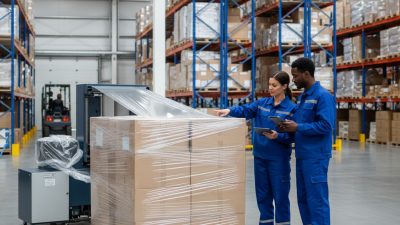
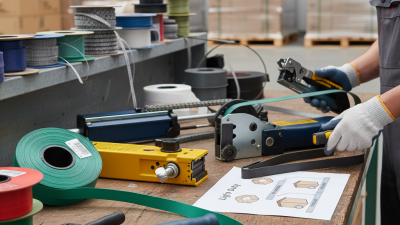
A pallet can look secure and still shift when a vehicle brakes or turns. Consistent wrapping helps control that risk by applying repeatable film tension, overlap, and containment around the load. This matters in ASTM D4169 testing, where the packaged shipping unit faces distribution hazards selected for its expected journey. ASTM D4169-23 defines three assurance levels—I, II, and III—to set test severity. The right level depends on the distribution risk; wrapping alone cannot guarantee a pass.

In practice, repeatability makes test results easier to interpret. If one pallet has loose film near the base and another has tight film around the corners, their movement may differ for reasons unrelated to the product. A machine can reduce those variations, but only when settings match the load. Too much tension can crush cartons. Too little can leave upper layers wobbling. Small details matter.

Tips: Record film tension, wrap count, overlap, and pallet dimensions for each test unit. Photograph the base and top layers before testing. Check for loose corners after wrapping. A perfect pattern is not always a stable load; verify it under the selected ASTM D4169 sequence.

Automatic Wrapper Throughput: Typical Systems Handle 20–60 Loads per Hour

Why Use a Wrapping Machine?

Automatic Wrapper Throughput: Typical Systems Handle 20–60 Loads per Hour

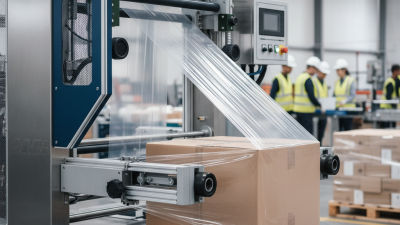
An automatic wrapper can handle roughly 20–60 loads per hour, depending on the system and working conditions. Treat that range as a planning guide, not a guaranteed production rate. Load dimensions, film changes, conveyor speed, and operator access all affect output. A line wrapping uniform pallets may run smoothly; irregular loads can slow it down. Small delays add up.

Tips: Track completed loads for a full shift. Note stoppages, film changes, and rewraps. Compare the result with your target before choosing a machine or setting a faster cycle. Watch the handoffs.

Throughput matters most when wrapping is a bottleneck. If pallets queue beside the wrapper, automation may help maintain a steadier flow and reduce repetitive manual work. But a faster cycle alone will not fix poor pallet quality or uneven upstream supply. Check that loads arrive consistently and that staff can safely clear jams. Measure actual output after installation, too; the first estimate may be wrong. That is useful feedback, not a failure.

Measuring Film Efficiency in Grams per Pallet and Wrapping Cycle Time

Why Use a Wrapping Machine?

Film efficiency is not judged by appearance alone. Weigh the film used on each pallet, then record the full wrapping cycle, from loading to film cutting. Compare identical loads, film specifications, and containment settings. Otherwise, a lighter wrap may simply mean weaker load security.

Eurostat’s 2022 packaging-waste dataset reports 186.5 kilograms of packaging waste per EU resident. That figure covers all packaging, not pallet film, but it shows why material use deserves careful measurement. In an illustrative line trial, a machine used 142 grams per pallet instead of 165 grams, while cycle time fell from 48 seconds to 36. That is 23 grams saved per load and 12 seconds returned to production. These are example results, not an industry benchmark. Test a representative sample, and check load stability after transport vibration. Small details matter. Film tension, overlap, and corner protection can change the result. A spreadsheet may suggest a clear winner; real pallets sometimes disagree. Recheck after changing the recipe, and keep both measurements visible: grams per pallet and seconds per cycle.

Machine Guarding and Operator Safety Under OSHA 29 CFR 1910.212

Why Use a Wrapping Machine?

A wrapping machine can make packaging more consistent, but moving parts create real hazards. OSHA 29 CFR 1910.212 requires guarding against dangers such as rotating parts, ingoing nip points, and points of operation. On a turntable wrapper, hands can be caught between the load and the platform. A powered film carriage can also create pinch points. Hands move quickly.

A suitable guard should prevent employees from reaching into hazardous areas during normal operation. Fixed barriers, protective enclosures, or other safeguards may be appropriate, depending on the machine and task. Guards should be securely attached where practical and should not create a new hazard themselves. Operators also need clear instructions on safe loading, clearing film, and responding to jams. An emergency stop is useful, but it does not replace guarding.

Daily checks matter. Look for loose panels, damaged interlocks, exposed rollers, or film scraps near moving components. Never treat a bypassed safeguard as a minor convenience. Some access is necessary for setup and cleaning, which can make safe design less straightforward than it looks. Review those tasks with the people who perform them, and follow applicable energy-control procedures when servicing equipment. A brief, documented inspection can reveal problems before a rushed shift makes them harder to notice.

Why Use a Wrapping Machine? - Machine Guarding and Operator Safety Under OSHA 29 CFR 1910.212

Safety Dimension Wrapping-Machine Example OSHA 29 CFR 1910.212 Connection Practical Safety Check
In-running nip points Powered rollers, conveyor pinch points, or film-feed mechanisms can draw in fingers, hands, or loose clothing. Section 1910.212(a)(1) identifies in-running nip points as machine hazards that must be guarded. Check that fixed or interlocked guards prevent access to hazardous roller and conveyor areas during operation.
Rotating components A rotating turntable, wrapping arm, shafts, or other moving parts may catch clothing or create impact and entanglement hazards. Section 1910.212(a)(1) includes rotating parts among the hazards requiring guarding. Inspect barriers and access controls around rotating zones; keep operators outside the machine’s hazardous movement area during cycles.
Point-of-operation access An operator may reach into a hazardous area while loading, positioning, or adjusting a load near moving equipment. Section 1910.212(a)(3)(ii) requires point-of-operation guarding when operation exposes an employee to injury and, where no specific standard applies, protection from access to the danger zone during the operating cycle. Confirm guards or other appropriate safeguarding prevent reaching into the danger zone while hazardous motion is occurring.
Guard design and condition A missing, loose, damaged, or poorly positioned guard can expose workers to moving parts or create a new hazard. Section 1910.212(a)(2) states that guards should be affixed to the machine where possible, secured elsewhere if attachment is not possible, and must not create an accident hazard. Before use, check that guards are secure, intact, correctly positioned, and do not obstruct safe operation in a way that encourages bypassing them.
Hand tools and safe access A tool used to guide film or reach into a machine may reduce direct hand contact but does not remove the underlying machine hazard. Section 1910.212(a)(3)(iii) allows special hand tools to supplement required guarding, but not to replace it. Do not treat a reach tool as a substitute for required guards. Review loading and film-threading procedures for safe access.
Machine stability A fixed wrapping machine that shifts or “walks” during operation can create additional hazards. Section 1910.212(b) requires machines designed for a fixed location to be securely anchored to prevent walking or moving. Check that fixed equipment is securely anchored and that its installation remains stable during normal operation.
Important: OSHA 29 CFR 1910.212 sets general machine-guarding requirements; the appropriate safeguards depend on the machine’s design and hazards. This table is a general reference, not a complete compliance assessment.