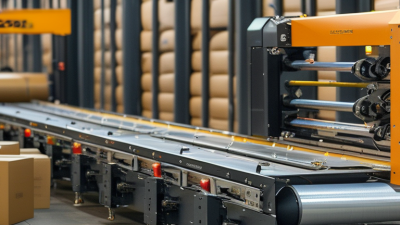
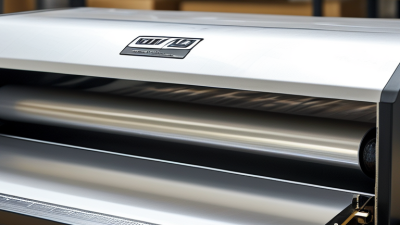
Global packaging buyers are entering 2026 with tighter energy budgets, faster product changeovers, and stronger sustainability expectations. The heat shrink tunnel remains a practical finishing system for bundles, trays, bottles, and retail multipacks. Yet tunnel performance depends on film type, package geometry, line speed, and local power conditions. It is not a universal machine.
Industry reports support this more careful view. PMMI’s 2024 State of the Industry report highlights automation, labor availability, and energy efficiency as major packaging machinery concerns. Smithers’ Future of Global Packaging to 2029 also links packaging growth with material efficiency and sustainability pressures. These findings matter when comparing electric, gas, infrared, steam, and hybrid tunnel designs. A low purchase price may hide higher energy use, slower warm-up, or difficult temperature control.
Small details matter.
For example, a beverage line may need stable airflow around wet containers, while a carton bundling line may prioritize tunnel width and film recovery. Infrared systems can provide rapid heating, but uneven package surfaces may require careful testing. Steam tunnels can suit some shrink films, although water treatment and maintenance add operating considerations. Gas systems may deliver strong heating capacity, but ventilation and site regulations require professional review.
Published market figures can differ between research firms. That is worth remembering. Buyers should verify claims through factory trials, machine logs, energy measurements, and reference installations. This guide examines the top heat shrink tunnel types expected to attract global buyers in 2026, with attention to application fit, operating risk, energy behavior, and long-term serviceability.
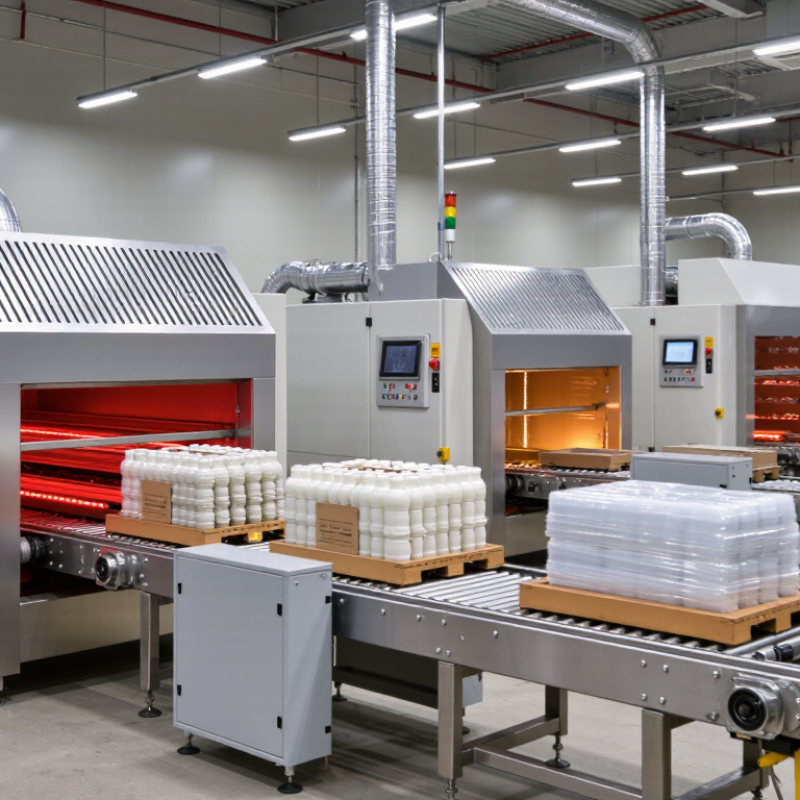
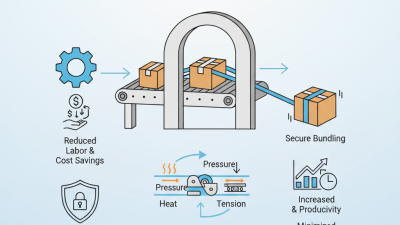
A heat shrink tunnel uses controlled heat to tighten plastic film around a product or bundled package. The sealed package enters on a conveyor, where heated air softens the film. As the film contracts, it follows the product’s shape and creates a cleaner, tighter finish.
Most tunnels use electric heating, gas heating, or recirculated hot air. Electric models suit many indoor packaging lines because they offer steady temperature control. Gas systems can deliver strong heat for high-throughput operations, but they require careful ventilation and installation planning. Recirculating designs reuse warm air, which may reduce energy waste. Airflow matters as much as temperature. Uneven airflow can leave loose corners, wrinkles, or overheated film.
Tips: Match tunnel size to the largest package, not the average one. Start with moderate heat and conveyor speed, then adjust through sample testing. Watch the film closely. If it turns cloudy, burns, or opens at the seal, the settings may be too aggressive. Film thickness and package material also change the result.
A reliable setup includes temperature controls, airflow adjustment, guarding, and emergency stops. Operators should check seals, conveyor alignment, and ventilation during routine inspections. In practice, the first setting is rarely perfect. That is normal. A short test run can reveal more than a specification sheet, especially when package shapes vary. Overheating is not better shrinking; it can weaken the film and waste energy.
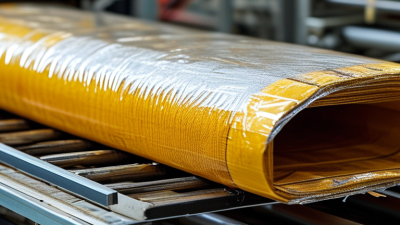
Heat shrink tunnels should match the film, product shape, and production speed. Electric hot-air tunnels suit cartons, trays, and small retail packs. They provide steady airflow and simple temperature control. Recirculating models reduce heat loss during continuous operation. They are practical for mixed product sizes, though uneven loading can create wrinkles.
Steam tunnels work well for sleeve labels on bottles and shaped containers. They produce even surface contact around curves. Infrared tunnels offer focused heating for compact lines and sensitive products. Hybrid tunnels combine hot air and infrared heating for faster shrinkage. Polyethylene film usually needs stronger airflow and higher heat than polyolefin film. Grand View Research estimates the global shrink packaging market could grow at about 6% annually through 2030. Smithers also identifies automation and material efficiency as major packaging investment trends. These figures suggest demand will favor flexible, controllable equipment.
Tips: Test the exact film before buying. Measure tunnel length, conveyor speed, and power use. Ask for samples using your real products. A machine can look efficient on paper, yet waste film during changeovers. This is often overlooked. Check temperature uniformity at the tunnel entrance and exit. Operators should adjust airflow without stopping production. Steam may improve sleeve quality, but it adds water treatment and maintenance work. Small buyers sometimes underestimate that burden.
For 2026 global buyers, heat shrink tunnel selection depends on product shape, film type, and required output. Electric hot-air tunnels suit general packaging and offer straightforward temperature control. Steam tunnels provide gentle, even shrinking for sensitive films and irregular products. Infrared systems heat quickly, but they require careful distance and exposure control.
Compare more than heating method. Measure tunnel length, usable opening, conveyor load, and actual throughput. Temperature stability matters because uneven heat can leave loose corners or damaged film. Check airflow direction and circulation quality, especially around tall cartons. A variable-speed conveyor helps operators match shrinking time with different package sizes. Film compatibility should be tested with real samples, not only supplier data.
Energy performance also affects long-term cost. Good insulation reduces heat loss near the tunnel entrance and exit. Digital controls should show stable readings and allow repeatable settings. Ask about voltage options, emergency stops, guarding, and access for cleaning. Maintenance access is often overlooked. That mistake becomes expensive. A higher temperature is not always faster. Excess heat may distort printed film, soften products, or increase waste. Production trials should record warm-up time, power use, sealing quality, and reject rates. Some specifications look impressive on paper, yet performance can change under continuous loading. Leave room for operator feedback, because practical handling problems rarely appear in a brochure.
Key operating temperature ranges are compared below. Actual settings depend on film material, package geometry, conveyor speed, and required shrink quality.
How to compare: Steam tunnels operate at lower temperatures with high humidity, while infrared systems deliver concentrated heat and faster surface response. Electric and gas-fired hot-air tunnels provide flexible, widely used processing conditions for different packaging formats.
2026 Top Heat Shrink Tunnel Types for Global Buyers
How to Select the Right Tunnel for Global Operations
Selecting a heat shrink tunnel requires more than comparing heating power and conveyor speed. Global operations need equipment that suits local voltage, climate, film materials, and operator skills.
Start with the package. Hot-air tunnels handle many common shrink films and offer flexible temperature control. Steam tunnels can provide even shrinking on sensitive products, but they require clean water management and corrosion protection. Infrared systems heat quickly and use compact layouts, although uneven loading may create visible defects. Your film supplier’s recommendations matter.
Measure real production conditions. A tunnel rated for 30 packages per minute may perform differently with tall cartons, cold storage areas, or unstable film thickness. Throughput is only one factor. Seal quality matters more. Check tunnel length, airflow direction, temperature range, conveyor adjustment, and access for cleaning.
Electrical compatibility deserves attention. Confirm voltage, frequency, plug standards, and protective requirements before shipment. Ambient temperature and humidity can also affect performance. Maintenance should be simple, with accessible heaters, sensors, belts, and control panels.
A common mistake is choosing the fastest machine. That assumption can increase waste and operator training time. Review sample packages under realistic conditions, not only perfect test cartons. Leave room for future product changes, but avoid buying unused capacity. The best tunnel is practical, serviceable, and consistent across locations.
| Tunnel Type | Typical Heating Method | Typical Operating Temperature | Typical Conveyor Speed | Common Chamber Width | Best-Suited Shrink Films | Recommended Applications | Key Advantages | Main Limitations | Global Operation Considerations |
|---|---|---|---|---|---|---|---|---|---|
| Recirculating Hot-Air Tunnel | Electric heaters with forced-air circulation | 120–220 °C | 5–20 m/min | 300–1,200 mm | PE, PVC, POF and standard polyolefin films | General-purpose bundling, cartons, trays and multipacks | Versatile; even heat distribution; suitable for many package sizes | Higher energy use than highly targeted heating systems; may require longer dwell time | Confirm electrical frequency, rated voltage, conveyor direction and local safety requirements |
| Electric Circulation Tunnel with Multiple Heating Zones | Independent electric heating and airflow control by zone | 100–250 °C | 5–25 m/min | 400–1,500 mm | POF, PE, PVC and films requiring staged shrinking | High-volume lines, irregular products and heat-sensitive packaging | Precise temperature control; better adjustment for different film grades and package formats | Higher purchase cost and more complex controls | Useful for facilities serving multiple markets where film thickness and package formats vary |
| Gas-Fired Hot-Air Tunnel | Direct or indirect gas burner with recirculated hot air | 120–220 °C | 8–30 m/min | 600–1,800 mm | Primarily PE and high-throughput polyolefin films | Large cartons, beverage multipacks, pallet loads and continuous production | High heating capacity and potentially lower operating cost where industrial gas is economical | Requires gas infrastructure, exhaust management and trained maintenance personnel | Check local fuel regulations, gas pressure, ventilation, emissions rules and fire-protection requirements |
| Steam Shrink Tunnel | Low-pressure saturated steam distributed through adjustable manifolds | Approximately 80–100 °C | 5–25 m/min | 300–1,200 mm | PVC, PETG and other steam-responsive sleeve films | Bottles, cans, containers and full-body shrink-sleeve labels | Excellent sleeve conformity; low film surface temperature; attractive finish on contoured containers | Needs a reliable steam source, water treatment and condensate handling | Evaluate boiler standards, water quality, drainage, insulation and steam availability at the destination site |
| Infrared Radiation Tunnel | Infrared emitters with controlled radiation intensity | 150–300 °C emitter surface temperature | 3–15 m/min | 250–900 mm | Films that respond well to radiant heating, including selected POF and PVC grades | Small products, short runs, compact lines and targeted shrinking | Fast heat response; compact footprint; efficient heating of exposed film surfaces | Line-of-sight heating can create uneven results on shadowed or irregular packages | Request film-specific trials and verify guarding, emitter life, controls and spare-part availability |
| Hot-Air L-Shaped or Compact Tunnel | Electric forced-air heating in a compact enclosure | 120–200 °C | 3–12 m/min | 250–700 mm | POF, PVC and light-to-medium gauge PE films | Retail packs, small cartons, food trays and low-to-medium production volumes | Small footprint; simple operation; lower installation requirements | Limited package height, width and throughput compared with industrial tunnels | Suitable where floor space and electrical capacity are limited; confirm local plug and voltage configuration |
| High-Capacity Continuous Hot-Air Tunnel | High-volume electric or gas heating with heavy-duty recirculation | 130–220 °C | 10–40 m/min | 800–2,000 mm | PE, thick-gauge POF and industrial shrink films | Large multipacks, beverage cases, building materials and palletized loads | High throughput; robust construction; suitable for extended production schedules | Large footprint, higher utility demand and greater installation cost | Plan for floor loading, line integration, exhaust, maintenance access and local electrical or gas capacity |
| Modular Tunnel with Adjustable Conveyor and Airflow | Configurable electric hot-air modules with adjustable airflow | 100–230 °C | 4–25 m/min | 300–1,500 mm | POF, PE, PVC and mixed film specifications | Contract packaging, export production and operations with frequent product changeovers | Flexible configuration; easier future expansion; adaptable to different package dimensions | More setup parameters and potentially higher commissioning requirements | Prioritize recipe storage, multilingual controls, remote diagnostics and internationally available components |
| Selection Criteria for Global Buyers | |||||||||
| Film Compatibility | Match the tunnel's heat profile and airflow to the film's recommended shrinking range. | Common film families include POF, PE, PVC and PETG sleeve films. | Always validate the selected film, package shape and shrink percentage through production trials before final approval. | ||||||
| Package Envelope | Measure maximum package width, height and length, including product movement and clearance. | The usable opening should exceed the largest package dimensions with adequate airflow clearance. | Allow additional space for irregular shapes, handles, protrusions and grouped products. | ||||||
| Throughput Requirement | Calculate required packages per minute and conveyor loading pattern. | Conveyor speed alone does not determine capacity; package spacing and dwell time are also critical. | Choose a tunnel with practical reserve capacity rather than operating continuously at its maximum rating. | ||||||
| Utilities and Compliance | Verify voltage, frequency, phase, gas pressure, steam quality, ventilation and compressed-air needs. | Typical industrial electrical systems may use 380–480 V and 50/60 Hz, depending on the destination market. | The final configuration must comply with the installation country's electrical, machinery, fire and workplace-safety regulations. | ||||||
| Maintenance and Total Cost | Review heater life, fan access, belt replacement, insulation, controls and spare-part supply. | Total cost includes utilities, labor, consumables, downtime, installation and commissioning. | For global operations, prioritize standardized components, clear manuals, remote support and locally serviceable parts. | ||||||
| Note: The performance figures above are typical industry ranges for comparison and preliminary equipment selection. Actual results vary with film formulation and thickness, package geometry, load density, ambient conditions, tunnel insulation, conveyor design and required shrink quality. Final sizing should be confirmed through representative product and film trials. | |||||||||
Installation and safety should guide every heat shrink tunnel purchase. Chamber, conveyor, and infrared tunnels suit different film sizes and production speeds. A 2024 PMMI industry report placed U.S. packaging machinery shipments above 10 billion dollars, showing strong demand for automated systems. Yet higher automation does not remove installation risks. Verify voltage, ventilation, floor loading, and conveyor height before delivery. Measure twice.
Follow ISO 12100 risk-assessment principles and provide guarding around hot zones, moving belts, and electrical panels. BLS recorded 2.6 million nonfatal workplace injuries in private industry during 2023. That figure is not tunnel-specific, but it reinforces disciplined training. Keep hands clear. Operators need lockout procedures, heat-resistant gloves, emergency-stop access, and clear warning labels. Local electrical and fire requirements may differ, so a qualified technician should inspect the completed installation.
Maintenance affects seal quality, energy use, and uptime. Clean film residue from rollers and chambers each shift. Check belt tracking, temperature sensors, fan airflow, and insulation weekly. The U.S. Department of Energy reports that motor-driven equipment uses more than half of industrial electricity, making efficient motors and controlled airflow practical buying priorities. Ask suppliers for verified power consumption, spare-part availability, service response times, and temperature uniformity data. A low purchase price can hide expensive downtime. Some specifications still look impressive but lack independent testing. That deserves caution.