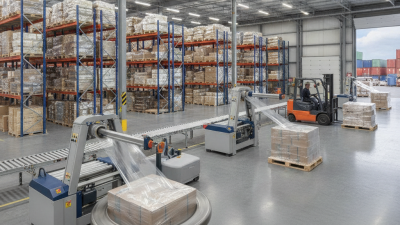
Global packaging operations demand more than fast wrapping. They need stable performance across changing products, film types, pallet sizes, and working conditions. A lantech wrapper can support these demands through automated wrapping, adjustable settings, and repeatable load containment. Its value becomes clearer when packaging teams measure real results, not impressive specifications alone.
In a busy distribution center, the difference may appear in small details. Film tension should remain consistent around uneven cartons. Corner protection must survive forklift movement and long-distance transport. Controls should be clear enough for operators during a demanding shift. Service access also matters when production cannot wait. These practical factors help determine whether a wrapper improves throughput, reduces material waste, and protects finished goods.
No machine fits every operation perfectly. That deserves honest review. Product dimensions, pallet stability, climate, labor skills, and maintenance resources can change the outcome. Experienced teams should test sample loads, inspect wrapped corners, and compare film usage before making a final decision. They should also review training, spare parts, safety procedures, and technical support in each operating region. A reliable supplier should explain both capabilities and limitations. That transparency builds trust.
For global packaging needs, the strongest choice is not always the fastest machine. It is the solution that performs consistently, can be maintained responsibly, and adapts to measurable business requirements. With careful testing and informed setup, a lantech wrapper may offer a practical foundation for safer, more efficient pallet packaging across diverse facilities.
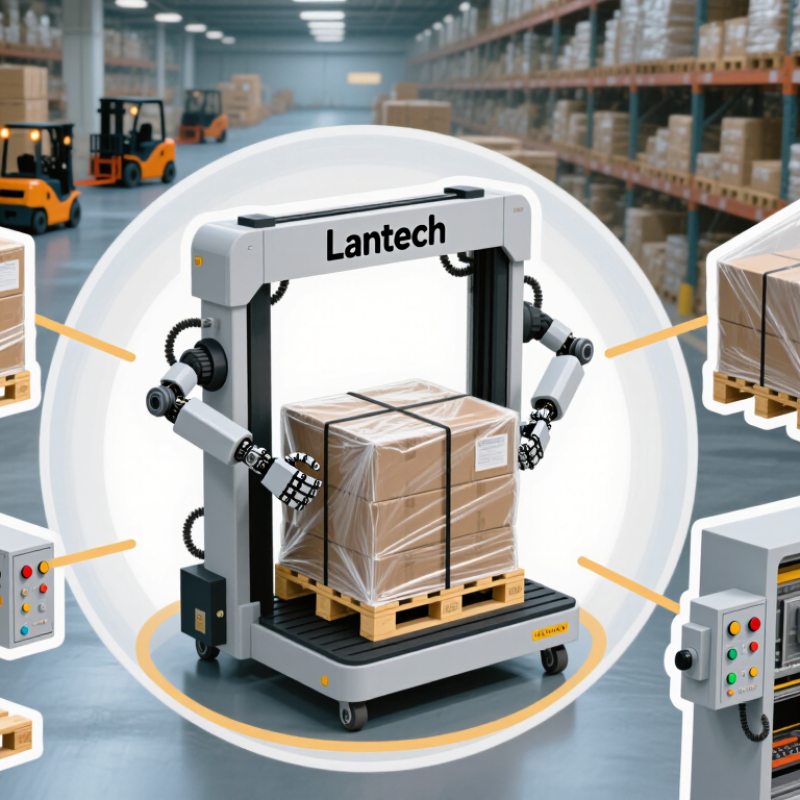
Global packaging has become a vast industrial network, with annual value exceeding $1 trillion, according to industry research. That scale changes how manufacturers evaluate wrapping equipment. A machine must handle different product sizes, films, electrical standards, and production speeds across multiple facilities.
A dependable wrapper should support repeatable tension control and stable film placement. These details matter when pallets travel long distances through changing climates. Operators also need clear controls, accessible maintenance points, and useful diagnostic data. In practice, a fifteen-minute film change can affect an entire shift. Small delays become expensive at global volume.
Field experience shows that no wrapper performs perfectly in every environment. A dusty warehouse may expose weaknesses that factory testing misses. A fast line may also reveal problems with film waste or uneven load containment. That is why site trials, operator feedback, and service training deserve serious attention. The best equipment choice may involve compromise. Lower film use can require tighter calibration. Higher throughput can increase maintenance demands. Strong technical support helps teams manage these realities across regions, especially when spare parts and trained technicians are not nearby. Reliability is built through testing, documentation, and honest review of daily performance.
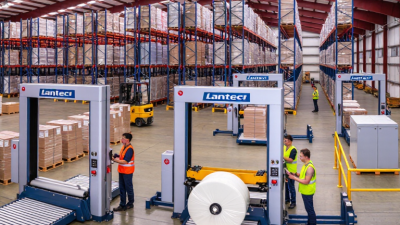
Why Choose a Wrapper for Global Packaging Needs?
Plastic packaging remains a difficult sustainability challenge. The OECD reported that only 9% of global plastic waste was recycled in 2019. Most plastic was landfilled, burned, or leaked into the environment. Packaging creates a large share of this pressure because it is often lightweight, short-lived, and difficult to collect. A wrapper can reduce material use through accurate film tension and consistent load coverage. However, less plastic does not automatically mean sustainable packaging. That assumption needs challenging.
The United Nations Environment Programme reports that packaging accounts for about 36% of global plastic production. Better wrapping equipment can help companies reduce damaged goods, excess film, and unstable pallets during transport. These improvements matter across international supply chains. They also support more reliable data collection, including film consumed per pallet and packaging waste per shipment. Still, recycling access differs sharply between countries. A package designed for recycling may not be recycled in practice.
Tips: Measure film use before changing materials. Record rejected loads, pallet damage, and recycling outcomes by location. Choose the simplest compatible film structure, then test it under real warehouse conditions. Ask suppliers for verified lifecycle data, not vague sustainability claims. Small operational errors can erase expected savings. That is an uncomfortable possibility. Reliable progress requires audits, worker feedback, and periodic review against OECD, UNEP, and local waste-management data.
Pre-stretch wrapping systems can reduce film consumption without sacrificing load security. Equipment data reports up to 30% less film use under suitable operating conditions. That figure is not universal. Film type, pallet shape, load weight, and machine settings all matter.
In daily packaging operations, consistent tension creates a tighter, more uniform wrap. A pallet leaves the line with fewer loose tails and fewer overlapping layers. This can reduce material waste around corners and unstable edges. It also supports more predictable packaging costs across different facilities. Small changes matter.
Experienced packaging teams should verify savings through controlled trials. Measure film weight before and after installation. Record wrap counts, breakage, product movement, and downtime. A simple test with identical pallets often reveals more than a brochure claim. Results may disappoint at first. That is useful information.
Reliable performance depends on trained operators and regular machine checks. Pre-stretch rollers need proper alignment and cleaning. Incorrect settings can increase film use instead of reducing it. Global operations also benefit from documented procedures and repeatable quality checks. When local teams use the same standards, performance becomes easier to compare. The best result is not the lowest film number. It is a secure load, less waste, and dependable operation over time.
Global packaging needs reliable load security across warehouses, ports, and changing climates. An automated stretch wrapper applies repeatable film tension, overlap, and containment force. This consistency helps reduce loose edges, leaning cartons, and avoidable product movement. Yet automation is not magic. Poor film selection or unstable stacking can defeat a precise machine. Experienced operators still inspect corners, pallet patterns, and film tails before shipment.
ISTA testing provides a practical way to examine wrapped pallets under simulated distribution stress. Teams can use vibration, shock, compression, and horizontal impact tests, depending on shipment risks. The goal is not merely passing a laboratory sequence. It is learning whether the load stays aligned when a truck brakes, a pallet is handled, or humidity changes. Measure visible movement, carton damage, film breaks, and product exposure. Record settings, load weight, dimensions, and test conditions. This evidence supports repeatable packaging decisions and gives quality teams a reliable basis for adjustments. One test may not represent every route. That limitation matters.
Tips: Start with the harshest realistic lane, not the easiest one. Calibrate sensors and verify film tension regularly. Photograph the pallet before and after testing. Compare failures by pattern, not guesswork. If a corner collapses, review stacking and edge protection before increasing wrap force. More film can hide a design problem. Field feedback should return to the packaging team, because real handling often reveals details that laboratory testing misses.
Why Choose a Lantech Wrapper for Global Packaging Needs?
EU packaging rules are changing how companies design, wrap, and document products. By 2030, packaging placed on the European market is expected to meet stronger recyclability requirements. Exact duties vary by material, format, and market. A wrapper must support that transition without sacrificing speed or product protection.
On a production line, material changes can affect tension, sealing, and film use. A reliable wrapper helps operators adjust these settings with precision. It can also reduce loose film around a pallet, limiting unnecessary material. Clear controls matter. So does repeatability. During line trials, teams should test recycled or recyclable films under real conditions, including cold storage, vibration, and uneven loads.
Compliance is not only a machine issue. Companies need supplier declarations, material specifications, test records, and traceable process settings. Local specialists should review the final packaging design before shipment. One weak assumption can create delays.
No wrapper solves every compliance challenge. Film availability differs between regions. Recyclability claims can also depend on collection and sorting systems. This part is often overlooked. A practical global strategy combines adaptable equipment, verified materials, operator training, and regular regulatory checks. That approach supports EU readiness while keeping packaging operations consistent across different facilities.
| Compliance Dimension | Verified Requirement or Milestone | Effective Date | Relevance to Wrapper-Based Packaging | Recommended Evidence or KPI | Source |
|---|---|---|---|---|---|
| EU regulatory framework | Regulation (EU) 2025/40 establishes harmonized requirements for packaging and packaging waste placed on the EU market. | Entered into force on 11 February 2025; generally applies from 12 August 2026. | Packaging processes should be designed with EU requirements in mind before the general application date. | Maintain a packaging compliance file covering material composition, design, suppliers, and market destination. | EUR-Lex |
| Recyclability by design | Packaging placed on the EU market must be recyclable. The regulation links recyclability to both design for recycling and the ability to be collected, sorted, and recycled at scale. | Design-for-recycling requirements begin in 2030; recycling-at-scale requirements apply from 2035. | Wrapper selection should support compatible materials, reliable separation, and established recycling streams. | Document polymer type, additives, coatings, adhesives, inks, and compatibility with the intended recycling stream. | Regulation (EU) 2025/40, Article 6 |
| Packaging minimization | Packaging weight and volume must be limited to the minimum necessary for functionality, protection, hygiene, and safety. | Applies under the regulation from 12 August 2026, with supporting criteria developed through EU measures. | Accurate film application, consistent tension, and right-sized wrapping can reduce unnecessary material use. | Track grams of packaging per shipped unit, packaging-to-product ratio, and material use per pallet or load. | Regulation (EU) 2025/40, Article 10 |
| Empty-space control | For grouped packaging, transport packaging, and e-commerce packaging, the maximum empty-space ratio is set at 50% from 2030, subject to the regulation's conditions. | 1 January 2030 | Load stabilization and wrapping practices should avoid creating unnecessary secondary packaging volume. | Measure package dimensions, product volume, void volume, and the percentage of empty space by format. | Regulation (EU) 2025/40, Article 24 |
| EU packaging-waste reduction | EU Member States must reduce packaging waste generated per capita by 5% by 2030, 10% by 2035, and 15% by 2040, compared with 2018 levels. | 2030, 2035, and 2040 targets | Lower-material wrapping systems and optimized application settings can support waste-prevention programs. | Report packaging mass per shipment, annual material consumption, and reduction against a documented baseline year. | Regulation (EU) 2025/40, Article 43 |
| Recycled content | The regulation introduces minimum recycled-content requirements for plastic packaging, with targets differentiated by packaging type and application. | Initial targets apply from 2030; higher targets apply from 2040. | Film specifications should allow the use of compliant recycled feedstock where technically and legally appropriate. | Retain supplier declarations, recycled-content calculations, chain-of-custody records, and batch-level documentation. | Regulation (EU) 2025/40, Article 7 |
| Material identification and labeling | Harmonized labeling is intended to provide information about packaging material composition and waste-sorting instructions. | Implementation will depend on EU harmonized rules and related technical acts. | Packaging data should be standardized so that labels and digital product information can be updated consistently across markets. | Maintain a material master record with resin identification, components, mass percentages, and disposal guidance. | Regulation (EU) 2025/40, Article 12 |
| Global market readiness | EU requirements apply to packaging placed on the EU market; other jurisdictions may use different recycling, labeling, recycled-content, or extended-producer-responsibility rules. | Ongoing requirement | A configurable wrapping process can help standardize packaging specifications while allowing market-specific adjustments. | Use a country-by-country compliance matrix covering material, labeling, reporting, take-back, and producer-responsibility obligations. | European Commission |
Note: Specific compliance outcomes depend on the packaging material, product category, market destination, and final technical criteria adopted under EU legislation.