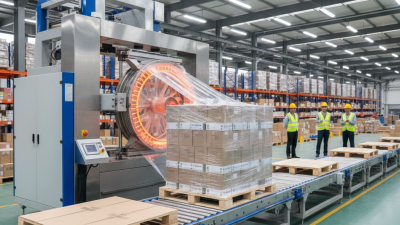
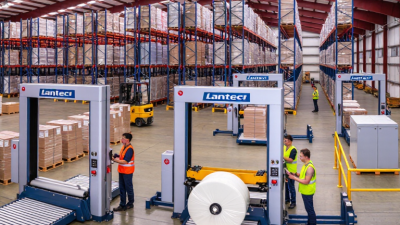
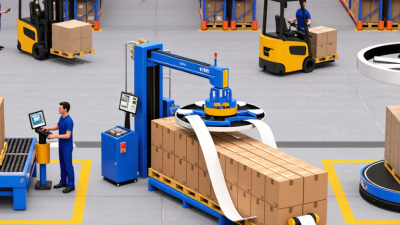
Choosing a Lantech stretch wrapper in 2026 means balancing load stability, film use, throughput, and operator effort. A fast turntable is not enough. Watch a real pallet leave the line: Does the film hold the corners? Can operators change rolls without awkward lifting? Does the machine fit the available floor space?
The MHI and Deloitte 2024 Annual Industry Report found that 55% of surveyed supply-chain leaders planned to increase technology investment. That figure is not specific to stretch wrapping, but it reflects growing pressure to improve productivity with measurable results. PMMI’s packaging-industry research also tracks automation and workforce challenges—factors worth weighing when comparing semi-automatic and automatic machines. Check each model’s stated capacity against your actual pallet dimensions, load weights, and daily volume.
Lantech founder Pat Lancaster’s pioneering work offers a useful principle: consistent load containment matters more than headline speed. Treat that as a selection benchmark, not a verified verbatim quotation. A wrapper that uses less film but leaves unstable loads is no bargain. Neither is an automatic system that sits idle because your line cannot feed it. There is no universal winner.
This guide compares Lantech models by application, from occasional pallet wrapping to demanding production lines. It also flags trade-offs that brochures can gloss over, including changeover time, film-carriage options, and service access. Some details depend on configuration. Confirm current specifications and request a trial with your own loads before choosing.
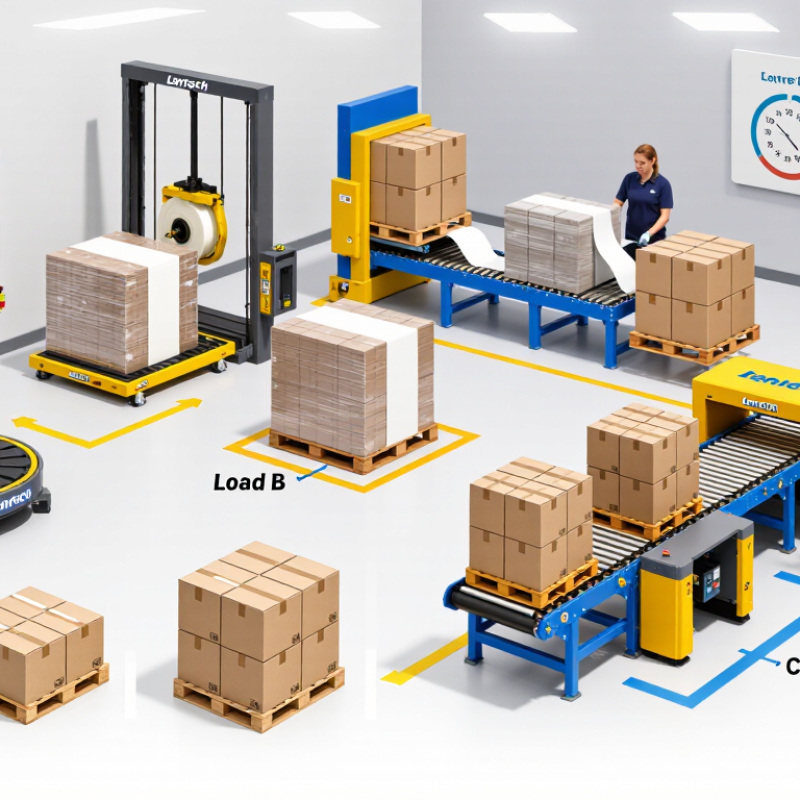
Choosing a stretch wrapper in 2026 starts with the pallet, not the catalog. Record typical and outlier load dimensions, weights, and daily cycles. Tall, light loads may need different containment from dense cases that shift during rotation. Measure overhang and check whether pallets arrive square. Small variations matter.
A turntable needs room for the load to rotate. A rotary-arm design keeps unstable loads still, but may require more space around the machine. Compare film systems using your actual products, and measure film use per pallet alongside load stability. A fast cycle is not useful if corners loosen during transport. Test several wrap settings. Results can be imperfect at first.
Check whether controls are simple enough for routine operator training, and inspect how film rolls and common wear parts are changed. Ask about maintenance access, safety features, and technician availability in your area. Compare quoted output with your real shift pattern, including changeovers and breaks. A short trial with your heaviest and most awkward loads can reveal problems a specification sheet misses. There is a trade-off: the most automated option may not be the easiest fit for every floor or crew.
Compare wrapper configurations by load flow, expected volume, available floor space, and automation needs. The figures below are general planning ranges, not specifications for a particular model.
| Wrapper Configuration | Typical Planning Throughput | How the Load Is Wrapped | Space and Handling Needs | Best Fit | Key Selection Checks |
|---|---|---|---|---|---|
| Semi-automatic turntable | About 10–30 loads per hour, depending on cycle settings and operator handling | The pallet rotates on a turntable while film is dispensed from a carriage. An operator typically attaches and cuts the film. | Requires space for the turntable and safe access for an operator and pallet truck or forklift. | Lower-volume operations, changing load types, and facilities seeking a simple entry point to stretch wrapping. | Check pallet dimensions and weight, operator workload, film-carriage settings, and whether the floor can support the loaded turntable. |
| Semi-automatic rotary-arm | About 15–35 loads per hour, with actual output affected by load size and handling time | A rotating arm carries the film around a stationary pallet. | Can suit loads that are unstable or difficult to rotate; requires clearance around the arm’s operating area. | Loads that may shift or tip when rotated, and sites that need semi-automatic operation. | Confirm arm clearance, pallet stability, load height, and safe movement of people and vehicles around the machine. |
| Automatic rotary-arm | About 30–60 loads per hour in many configured lines | The arm rotates around a stationary load; film attachment, cutting, and other functions may be automated. | Needs a defined conveyor or pallet-transfer path, guarding, and access for maintenance. | Medium-to-high-volume lines handling loads that should remain stationary during wrapping. | Check line speed, conveyor height, load stability, film-tail control, guarding, and integration with upstream and downstream equipment. |
| Automatic rotary-ring | About 50–100+ loads per hour in high-throughput configurations | A ring carrying the film travels around a load moving through the wrapping zone. | Usually requires a continuous conveyor line and sufficient overhead and service clearance. | High-volume operations with consistent pallet flow and a need for repeatable automated cycles. | Verify target line rate, load-size range, conveyor alignment, film supply access, and the effect of planned stoppages on the line. |
| Automatic inline turntable | About 20–50 loads per hour, depending on transfer time and cycle configuration | A load is automatically transferred onto a rotating platform, wrapped, and transferred onward. | Requires infeed and discharge handling, conveyor or transfer equipment, and safe access to the turntable area. | Automated lines where loads can be safely rotated and the available rate does not require a faster ring-style system. | Assess transfer time, pallet condition, load dimensions, conveyor compatibility, and whether rotation is suitable for the load. |
| Mobile stretch wrapper | Varies with travel distance, operator handling, and the number of wrapping cycles required | The wrapper travels around a stationary pallet instead of rotating the pallet or using a fixed wrapping arm. | Needs a clear, level travel path and enough surrounding space for the machine and operator. | Sites with large or awkward loads, limited ability to install a fixed machine, or wrapping locations spread across a facility. | Check floor condition, travel path, load stability, battery or power arrangements, and the time required to move between loads. |
How to choose: Start with measured peak loads per hour, not just daily totals. Then confirm the largest and smallest pallet dimensions, load weight and stability, desired film containment, available floor space, and integration requirements. Throughput ranges are indicative only; actual performance depends on the machine configuration, load, film, cycle settings, and material-handling system.