Blog

2026 How to Choose Pallet Shrink Wrap?

Choosing pallet shrink wrap in 2026 requires more than comparing roll prices. The correct film protects products, reduces handling damage, and supports measurable sustainability goals. It must also match your pallet pattern, warehouse temperature, transport route, and wrapping equipment.

Industry data shows why this decision matters. Plastics Europe’s Plastics—The Fast Facts 2024 reports that packaging represented about 39% of European plastics demand in 2022. Smithers’ The Future of Global Packaging to 2028 identifies material efficiency, recycling, and downgauging as continuing packaging priorities. These reports do not provide one universal film specification. They show a wider pressure: companies need stronger performance with less material.

The details are physical. A rough timber pallet can puncture thin film. A cold warehouse can reduce film flexibility. Uneven cartons may need higher containment force, while stable loads may not. Shrink film also requires controlled heat, unlike stretch film, so equipment settings and operator training matter. That distinction is often overlooked.

Small errors become expensive.

A useful comparison should examine thickness, shrink ratio, puncture resistance, tear strength, recycled content, and end-of-life options. Request test data, not vague claims. ASTM D882 can support tensile testing, while ASTM D1709 helps assess impact resistance. Results still depend on actual load conditions. Laboratory performance is not the whole story.

This guide explains how to choose pallet shrink wrap for 2026 with evidence, practical experience, and careful skepticism. The cheapest roll may fail during one sharp-corner shipment. The strongest film may waste material without improving stability. Your best choice should protect the pallet, reduce total packaging use, and remain realistic for daily operations.
2026 How to Choose Pallet Shrink Wrap?

What Is Pallet Shrink Wrap and How Does It Work?

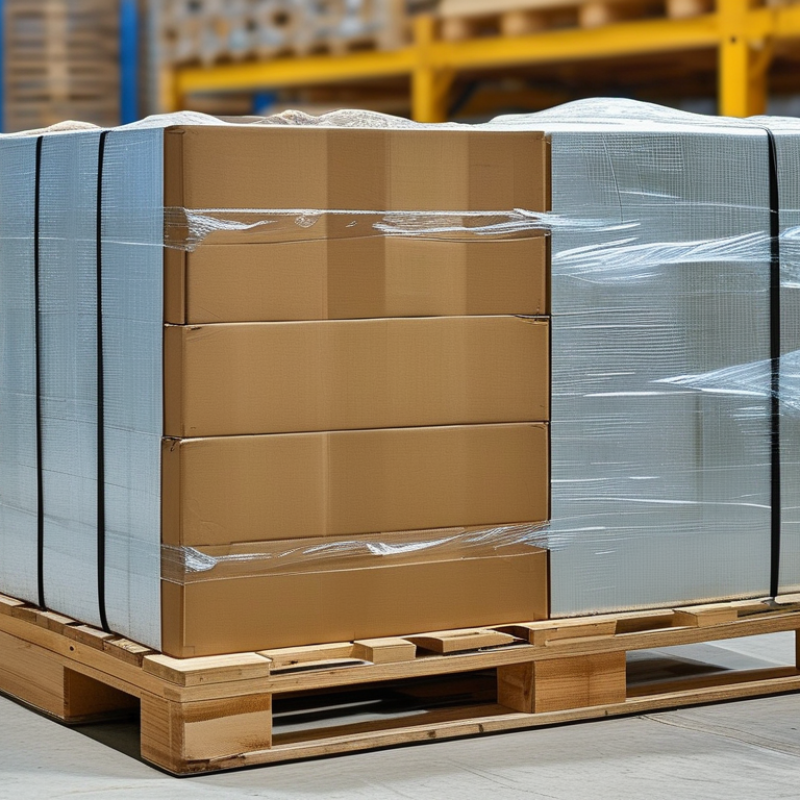
Pallet shrink wrap is a plastic film designed to secure products after heat is applied. Unlike stretch film, it does not tighten through pulling alone. A heat gun or shrink tunnel warms the film, causing it to contract around cartons, trays, or irregular loads. The result is a compact protective layer that helps reduce dust, moisture exposure, shifting, and minor surface damage during handling.

The process needs control. Operators place the film around the pallet, seal the edges, and apply even heat across the load. Too little heat leaves loose panels and weak seals. Too much heat can create holes, burn marks, or damaged packaging. Film thickness, shrink ratio, load shape, and transport conditions should guide the choice. In practical warehouse work, clear film improves inspection, while stronger film suits sharp corners and heavier cartons. Still, thicker is not always better.

Tips: Check the pallet corners before wrapping. Add corner protection when edges may puncture the film. Keep the film away from open flames and follow equipment instructions. Test one pallet first. This small trial often reveals problems that specifications miss. Inspect the finished wrap by pressing lightly on several sides. It should feel firm, not dangerously tight. Experienced teams should also review failed loads instead of blaming the material immediately. Sometimes the real issue is poor stacking, uneven heat, or rushed handling.

2026 How to Choose Pallet Shrink Wrap? - What Is Pallet Shrink Wrap and How Does It Work?

Pallet Shrink Wrap Selection and Performance Guide
Selection Dimension Common Options Typical Data or Working Range How It Affects Pallet Performance
Material Polyethylene (PE), commonly LDPE or LLDPE PE film is widely used for pallet packaging because it can stretch, shrink, and resist moisture. Material formulation influences puncture resistance, tear propagation, shrink force, clarity, and recyclability.
Film Thickness Light, medium, or heavy gauge Typical pallet shrink film is approximately 50–150 micrometres (about 2–6 mil), depending on the load. Thicker film generally provides greater puncture and tear resistance, but uses more material and may require more heat.
Shrink Direction Single-direction or multi-direction shrink Films may be designed to shrink mainly across the width or in both machine and transverse directions. The shrink pattern should match the load shape to reduce loose film, bridging, and uneven coverage.
Shrink Temperature Low-, medium-, or high-temperature activation Many PE shrink films activate broadly around 120–200°C; the exact setting must follow the film supplier’s specification. Correct heat activation tightens the film without scorching, excessive thinning, or damaging heat-sensitive products.
Load Weight Light, medium, or heavy palletized goods There is no universal film thickness for a given weight; load geometry, edges, and handling conditions are equally important. Heavier or unstable loads usually need higher holding force, stronger film, and more controlled application.
Load Shape and Edges Uniform cartons, irregular goods, sharp corners, or protrusions Sharp edges and projecting parts increase the risk of puncture and film splitting. Use higher-puncture-resistance film or edge protection where corners could cut through the wrap.
Required Stretch Manual, semi-automatic, or automatic application Pre-stretch levels are commonly specified by equipment and film design; actual results depend on tension and application speed. Adequate stretch improves load containment and can reduce film consumption, while excessive stretch may cause tearing or reduced recovery.
Transparency Clear or opaque film Clear film permits visual inspection and barcode scanning; opaque film conceals contents and can reduce light exposure. Choose clear film for identification and inspection, or opaque film where privacy, security, or light protection is needed.
Weather and Storage Conditions Indoor storage, outdoor storage, cold chain, or high-humidity environments PE shrink film provides moisture resistance, but it is not a substitute for a sealed waterproof package. Outdoor or long-term storage may require UV-stabilized film and additional protection against water entry and abrasion.
Application Method Manual heat gun, shrink tunnel, or automated hooding system Heat distribution, conveyor speed, airflow, and dwell time determine the final shrink result. The film must be compatible with the equipment to achieve uniform shrinkage and avoid overheating or weak spots.
Load Containment Light containment, standard containment, or high containment Film performance should be assessed using holding force, tear resistance, puncture resistance, and load stability tests. Higher containment helps limit shifting during forklift handling, warehouse movement, and transport vibration.
Sustainability Considerations Material reduction, recycled content, and recyclability Using the minimum film amount that safely contains the load can reduce packaging waste; clean PE film is commonly collected in dedicated plastic-film recycling streams. Evaluate total material use, recycled content, contamination, and local recycling capability rather than thickness alone.
How pallet shrink wrap works: The film is placed around a palletized load, sealed or overlapped, and heated. Heat causes the polymer film to contract, allowing it to conform to the load and provide protection from dust, handling abrasion, and limited moisture exposure. A packaging trial is recommended before selecting the final film gauge and machine settings.

How to Assess Pallet Size, Load Type, and Wrapping Requirements

2026 How to Choose Pallet Shrink Wrap?

How to Assess Pallet Size, Load Type, and Wrapping Requirements

Measure the pallet before selecting film. Record length, width, height, corners, and overhang. A tall pallet needs stronger containment near its upper layers. A wide pallet may need wider film or extra overlap. Do not estimate from carton count alone. A 1,000-kilogram load can behave differently from a 1,000-kilogram load with a low center of gravity.

Assess the load type carefully. Rigid cartons usually need moderate tension and consistent overlap. Irregular products need more film contact around gaps and exposed edges. Dusty, cold, or damp surfaces may reduce adhesion. The International Safe Transit Association’s ISTA 3E protocol stresses testing the complete unit load, not only the packaging material. Use this approach during trials. Check shifting, corner damage, film breaks, and pallet lean after vibration or transport simulation.

Tips: Start with a small test group. Wrap identical pallets at several tensions, then measure film usage and load movement. The 2024 MHI Annual Industry Report identifies supply-chain resilience as a major operational priority, but resilience is not created by using the thickest film. It comes from repeatable settings and inspection. Film that looks secure can still hide weak lower layers. That is where my assessment often needs correction. Recheck the load after storage, not only immediately after wrapping. Record results by pallet size, product weight, and route. Thin film may reduce material use, but only when containment remains stable.

How to Compare Shrink Film Materials, Thicknesses, and Strength

2026 How to Choose Pallet Shrink Wrap?

Material selection affects load stability, puncture resistance, and machine performance. Polyethylene film suits pallets with sharp corners, uneven cartons, or outdoor handling. Polyolefin film can offer clearer presentation, but it may require more controlled heating. PVC film is less common for large pallet loads. Always confirm equipment compatibility before ordering.

Thickness alone does not measure strength. A 60-micron film may outperform a thicker film with poor puncture resistance. Compare tensile strength, elongation, tear resistance, and shrink force. ASTM D882 supports tensile testing, while ASTM D1709 measures impact resistance. These results matter when a pallet meets a forklift or a rough truck floor. Do not guess.

Smithers’ 2024 market study forecasts the global stretch and shrink films market to grow at about 4% annually through 2028. Its findings also highlight downgauging and material efficiency as key industry directions. Still, thinner is not automatically better. In a warehouse trial, wrap identical pallets with two thicknesses. Check corner breaks, film memory, and shifting after 24 hours. Measure the load. My first choice is not always right. Temperature, humidity, wrapping speed, and operator tension can change the result. Choose the lightest film that survives your actual distribution route, not merely the cheapest roll.

How to Choose Between Manual, Semi-Automatic, and Automatic Wrapping

2026 How to Choose Pallet Shrink Wrap?

Choosing pallet shrink wrap starts with the wrapping method, not the film label. Manual wrapping suits low-volume warehouses, seasonal shipments, and irregular pallet sizes. An operator can adjust tension around fragile cartons. However, the work is slower and physically demanding. One loose turn can weaken the load.

Semi-automatic wrapping fits growing operations with steady daily output. The operator places the pallet, attaches the film, and starts the cycle. The machine controls rotation and film delivery more consistently than hand wrapping. Automatic wrapping works best for high-volume lines with uniform pallets. It reduces labor handling and keeps production moving. It also needs space, maintenance, and trained technicians. A fast machine is not always the best investment.

Tips: Measure your average pallets, daily quantity, and load height before choosing equipment. Check whether cartons have sharp corners or unstable layers. Test several film thicknesses and stretch levels with real shipments. Watch the wrapped pallet after transport. If cartons shift, increase containment force or improve the load pattern. Do not assume thicker film solves every problem. Sometimes the wrapping settings are wrong. A simple trial often reveals more than a sales chart. Keep records of film use, damaged loads, and operator time. This evidence supports a more reliable decision, even when the first choice needs revision.

How to Check Safety, Sustainability, Cost, and Storage Conditions

2026 How to Choose Pallet Shrink Wrap?

How to Check Safety, Sustainability, Cost, and Storage Conditions

Safety starts with the finished pallet, not the film roll. Check whether the wrap holds cartons firmly during lifting, turning, and transport. A practical trial should include sharp corners, uneven loads, and a partly filled pallet. Measure film tension at the top, middle, and bottom. Excessive force can crush cartons or damage products. Keep hands clear of moving equipment, and follow the machine’s operating instructions.

Sustainability needs evidence, not attractive claims. Compare film weight, recycled content, puncture resistance, and end-of-life options. Thinner film may reduce plastic use, but it can increase breaks and replacement waste. That weakens the result. Record film consumption per pallet for several shifts. One quiet afternoon is not enough. Ask suppliers for technical data and clear recycling guidance, then check whether local facilities can accept the material.

Cost includes more than the price per roll. Calculate film used per pallet, machine time, damaged goods, and rewrapping labor. Storage also matters. Keep rolls dry, clean, and away from direct sunlight, heaters, and sharp edges. Follow the supplier’s temperature range, and avoid placing heavy items on rolls. Use older stock first. I would also test stored film before large production runs, because performance can change unnoticed. A simple checklist often reveals savings that a cheaper roll cannot.

How to Choose Pallet Shrink Wrap in 2026

The chart compares common pallet-wrap options using practical selection criteria: load safety, sustainability potential, cost efficiency, and storage-condition tolerance. Scores range from 1 to 5, with 5 representing the strongest overall suitability.

The comparison reflects typical industry characteristics. Actual performance depends on film thickness, stretch ratio, recycled content, load weight, transport conditions, and supplier test data. Store stretch film in a dry, cool indoor area away from direct sunlight and heat sources.