Blog

How to Choose a Wrapping Machine for Your Business?

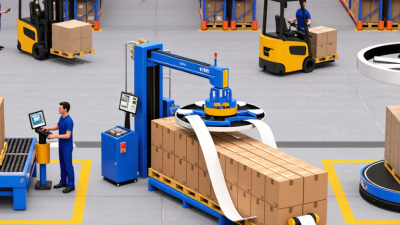
Choosing a wrapping machine is not simply a matter of comparing prices and production speeds. It is a decision about product protection, workplace efficiency, maintenance, and future growth. A small bakery may need a compact film wrapper for trays and boxes, while a warehouse may require an automated system for continuous pallet loads. The right choice depends on what you wrap, how often you wrap it, and how consistently the machine must perform.

Start with the product itself. Measure its length, width, height, weight, and surface condition. A soft package can wrinkle under excessive tension. A sharp edge may tear weak film. Product samples should be tested before any purchase. Small details matter.

Review the machine’s speed, sealing method, film compatibility, controls, and power requirements. Ask suppliers for demonstrations, maintenance records, spare-parts information, and clear warranty terms. Reliable manufacturers should explain limitations, not only advertise impressive output figures. Their advice should match your working conditions and local safety requirements.

A practical evaluation also includes operator training and cleaning access. A machine that runs quickly but causes frequent jams may reduce real productivity. That mistake is easy to make. The cheapest option may become expensive through film waste, downtime, and difficult repairs. Energy use also deserves attention, especially during long shifts.

No selection guide can remove every uncertainty. Production volumes change, and packaging materials evolve. However, careful testing, documented specifications, and honest supplier communication can greatly reduce risk. This guide explains how to choose a wrapping machine that fits your products, people, facility, and long-term business plans.

How to Choose a Wrapping Machine for Your Business?

Classify Products: Stretch, Shrink, Flow-Wrap, and Case Wrapping

Choosing a wrapping machine starts with the product, not the machine catalog. PMMI reported that U.S. packaging machinery shipments reached about $10.2 billion in 2022. That scale reflects growing demand for automation, but automation cannot fix poor product classification.

Stretch wrapping suits pallets, cartons, and stable loads. The film holds items together during storage and transport. Choose shrink wrapping when products need a tight, clear sleeve. Heat then contracts the film around the item. This works well for multipacks, trays, and irregular shapes. However, heat-sensitive products need careful testing. A small temperature error can damage labels or deform packaging.

Flow-wrapping creates a sealed film pouch around individual products. It fits snacks, bakery items, hardware, and other regularly shaped goods. According to Grand View Research, the global flow-pack market is projected to grow steadily through 2030, driven by portion control and shelf-life demands. Case wrapping is different. It handles boxes or cases, often closing and sealing them for distribution. The right choice depends on case dimensions, line speed, and sealing strength.

Test real products, including damaged cartons and uneven loads. A machine may perform perfectly during a short demonstration and fail after eight hours. I would not trust a brochure alone. Record film usage, changeover time, rejected packs, and operator adjustments. The Packaging Machinery Manufacturers Institute continues to identify labor availability as a major automation concern. That matters, but simple maintenance can matter more. Sometimes the fastest machine creates the highest total cost.
Set Capacity: Size the Line to OEE’s 85% World-Class Benchmark

How to Choose a Wrapping Machine for Your Business?

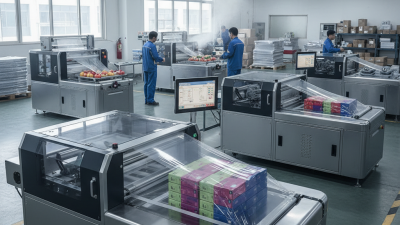
Choosing a wrapping machine starts with real output, not the advertised maximum speed. OEE’s widely used world-class benchmark is 85%. It combines availability, performance, and quality. Treat it as a planning reference, not a guarantee. If your operation needs 6,800 wrapped units per shift, calculate capacity after breaks, changeovers, film loading, and cleaning. A machine rated for 100 units per minute may deliver much less.

Measure your current line for at least two weeks. Record stoppage minutes, actual cycle speed, rejected packs, and product changes. Include short interruptions. They often disappear from formal reports but consume valuable capacity. A practical estimate is required demand divided by expected OEE. For example, 6,800 units divided by an 85% target requires about 8,000 theoretical units per shift. Add a reasonable safety margin for seasonal peaks.

Machine selection should also match your product mix and operators’ experience. Check how quickly guides, sealing temperatures, and film rolls can be adjusted. Ask for a production trial using your actual products and packaging materials. My first capacity estimate once ignored frequent format changes. The machine looked fast on paper, yet the shift target was missed. That mistake showed why laboratory speed cannot replace floor-level evidence. A slightly slower machine with stable feeding may outperform a faster model with repeated micro-stops. Allow room for improvement, but do not purchase capacity based on perfect conditions.

Verify Film Fit: Compare Gauge, Seal Range, and ASTM Test Data

How to Choose a Wrapping Machine for Your Business?

Film fit should be checked before comparing machine speed or price. Start with the load. Measure its width, height, corners, and surface texture. Then compare the film’s gauge with the machine’s approved thickness range. A thicker film may protect sharp edges, but it can need more heat and sealing force. A thinner film saves material, yet it may stretch unevenly or puncture during handling.

Seal range matters just as much. Review the film supplier’s recommended sealing temperature, dwell time, and pressure. Compare those values with the machine’s actual jaw settings, not only its brochure specifications. During a line trial, watch for weak corners, cloudy seals, and film shrinkage near the product. Small defects often appear after cooling. They are easy to miss at production speed.

ASTM test data can make this comparison more reliable. Check the test method, film gauge, conditioning, and laboratory temperature. Tensile strength, elongation, tear resistance, and puncture results can reveal how the film may behave around a real load. However, laboratory data does not guarantee identical machine performance. I once trusted a high puncture rating and overlooked poor seal consistency on dusty packages. That was a useful failure. Test samples should represent the actual product, wrapping speed, and storage conditions. Keep a record of seal temperature, pressure, and rejection rates during the trial. Both the film and machine settings may need adjustment.

Check Compliance: Apply ANSI/PMMI B155.1 and ISO 12100 Safeguards

How to Choose a Wrapping Machine for Your Business?

A wrapping machine should protect products without creating new hazards. Before comparing speed or price, review ANSI/PMMI B155.1 and ISO 12100 requirements. These standards guide risk assessment, safeguarding, and safer machine design. Walk around the proposed machine. Look for pinch points, rotating parts, sharp edges, and unexpected movement. Check whether guards, interlocks, emergency stops, and access controls match the task. A fast machine is not a good choice if operators must reach into dangerous areas.

ISO 12100 encourages risk reduction through the machine’s design, not warnings alone. ANSI/PMMI B155.1 also supports documented safety decisions for packaging equipment. Ask the supplier for risk assessments, safety circuit information, inspection procedures, and maintenance instructions. Confirm that operators can clear film jams without bypassing protective devices. In practice, the first assessment is rarely perfect. A real production trial may reveal blocked sightlines or awkward hand positions. Revisit the assessment after installation, training, and process changes. Small oversights can become daily risks.

Tips: Involve operators, maintenance staff, and safety specialists early. Test normal operation, cleaning, film replacement, and fault recovery. Record each hazard and its control. Do not accept a warning label as the only safeguard. Leave space around the machine for safe inspection. Training matters, but it cannot replace sound engineering.

Rank Total Cost: Use a 3–5-Year TCO Model, Not Purchase Price

How to Choose a Wrapping Machine for Your Business?

A low purchase price can hide expensive operating habits. Build a three-to-five-year total cost of ownership model before requesting quotations. Include installation, operator training, electricity, film waste, maintenance, spare parts, labor, downtime, and resale value. The U.S. Department of Energy’s Operations and Maintenance Best Practices Guide notes that maintenance and operation can represent a major share of equipment lifecycle costs. That warning matters.

Use a simple spreadsheet.

Measure real production conditions. Record rolls used per shift, changeover minutes, rejected packs, and emergency repairs. Then test each machine against those numbers. The International Federation of Robotics reported 541,302 industrial robots were installed worldwide in 2023, showing how quickly automated production is expanding. Automation may reduce labor pressure, but it can also increase technician and software costs. It is not automatically cheaper.

Annual cost tells more.

Calculate energy consumption at your local tariff. Add the cost of one hour of lost production, not only the technician’s invoice. PMMI industry research consistently identifies labor availability, uptime, and service support as major packaging-equipment concerns. Ask suppliers for documented cycle rates, film compatibility, preventive-maintenance intervals, and response times. Treat optimistic estimates carefully. A two-minute changeover claim may fail during a wet night shift or with inexperienced operators. Include a sensitivity test for energy prices, wage increases, and ten percent more downtime. The cheapest machine on paper may become the costliest asset by year three.