Blog

How to Choose a Stretch Wrap Machine?

Choosing a stretch wrap machine is not simply a matter of comparing prices and film speeds. It is a packaging decision that affects product protection, labor effort, material waste, and delivery reliability.

Pat Lancaster, founder of Lantech and a pioneer in automated pallet wrapping, once emphasized, “A stable load is the real measure of a good wrapping process.” That principle remains practical today. A machine may look impressive beside a bright showroom pallet, yet perform poorly with unstable cartons, dusty floors, or uneven loads.

Start with the load itself. Measure pallet dimensions, weight, height, and surface shape. Record how often loads arrive leaning, overhanging, or partially filled. These details guide the choice between a turntable, rotary-arm, or rotary-ring stretch wrap machine. They also influence film carriage, pre-stretch capability, and containment-force control.

Your production environment matters too. A warehouse wrapping forty pallets daily may need different automation than a distribution center handling several hundred. Check conveyor height, available floor space, electrical supply, operator training, and maintenance access. Small omissions become expensive later.

Film performance deserves close attention. A machine that stretches film aggressively can reduce consumption, but excessive force may crush fragile cartons. A slower setting might protect products better. Sometimes, “efficient” is not genuinely efficient.

The best decision comes from trials with real pallets, not ideal samples. Compare film usage, corner protection, cycle time, load stability, and operator feedback. Review the results honestly. No machine solves poor pallet building, unsuitable film, or inconsistent loading by itself.
How to Choose a Stretch Wrap Machine?

What Is a Stretch Wrap Machine and How Does It Work?

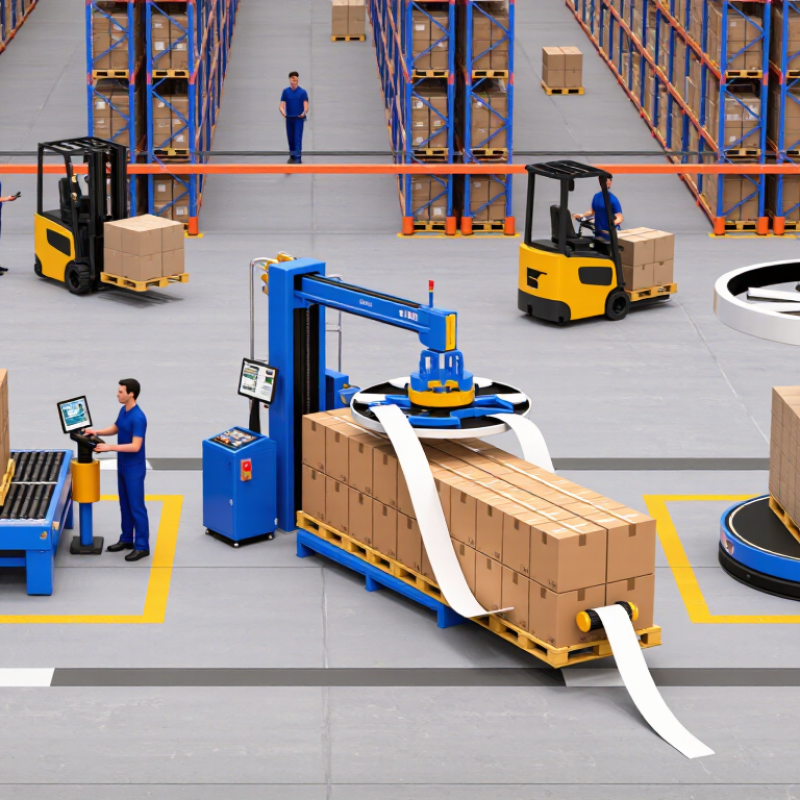
A stretch wrap machine applies elastic film around a pallet, carton, or irregular load. It replaces repeated manual wrapping with controlled rotation, tension, and film delivery. On a turntable model, the load rotates while a carriage moves vertically. A rotary-arm model keeps the load still and moves the arm around it. This matters when products are unstable, heavy, or difficult to move.

The film stretches before contact. Its stored tension then pulls packages together and limits shifting during transport. Operators usually adjust pre-stretch, wrapping speed, film overlap, and the number of top and bottom turns. Smithers’ 2024 review of stretch and shrink films identifies lightweighting and improved load stability as major market priorities. PMMI’s 2024 packaging automation report also links automation with labor availability and more consistent production. However, higher speed does not always mean better wrapping. Excessive tension can crush cartons or deform soft products.

Tips: Test the load, not only the machine. Measure pallet height, weight, corner strength, and film usage. Begin with moderate tension and inspect the bottom layers after handling. A useful trial includes transport vibration, forklift movement, and several hours of storage. The first setting may look efficient but still fail in real conditions. Record film grams per pallet and damaged-case rates. These figures reveal whether automation is truly reducing waste. Floor space, power supply, and operator training also deserve attention before installation.

How to Choose a Stretch Wrap Machine? - What Is a Stretch Wrap Machine and How Does It Work?

Machine Type How It Works Typical Load Size Typical Wrapping Capacity Operator Involvement Best Application Important Selection Factors
Manual Stretch Wrap Dispenser The operator guides the film around the load while controlling film tension with a handheld dispenser. Small or irregular loads Approximately 10–30 loads per hour, depending on load shape and operator speed High Film roll weight, ergonomic handle design, adjustable tension, and operator safety
Semi-Automatic Turntable Machine The pallet rotates on a turntable while the operator attaches the film and usually starts the wrapping cycle. Standard palletized loads, commonly up to about 1,200 × 1,200 mm Approximately 20–40 loads per hour Moderate Turntable diameter, maximum load weight, film carriage, wrap-cycle controls, and safety guarding
Semi-Automatic Rotary Arm Machine The load remains stationary while a rotating arm moves around it and applies the stretch film. Unstable, lightweight, or oversized loads Approximately 20–50 loads per hour Moderate Arm clearance, load height, floor space, film pre-stretch ratio, and access for forklifts
Automatic Turntable Machine Conveyors transfer pallets to the wrapping station, where the machine applies film and completes the cycle automatically. Uniform palletized loads Approximately 40–80 loads per hour Low to moderate Conveyor integration, pallet spacing, automatic film cutting, load detection, and control-system compatibility
Automatic Rotary Arm Machine The pallet travels through an automated station while a rotary arm wraps the stationary load. Unstable, tall, light, or heavy loads Approximately 40–100 loads per hour Low Arm speed, maximum load dimensions, conveyor layout, guarding, film tension control, and line speed
Automatic Ring-Type Machine A high-speed rotating ring applies film around the load while the pallet moves through the wrapping zone. Consistent loads on high-speed lines Approximately 60–150 loads per hour Very low Required throughput, ring opening size, film consumption, conveyor synchronization, maintenance access, and total cost of ownership

Selection note: A stretch wrap machine normally secures a pallet by rotating the load or the film carriage while controlled tension stretches plastic film around the products. The most suitable machine depends on load stability, dimensions, weight, required output, available floor space, labor availability, film consumption, and integration requirements.
Which Load and Packaging Requirements Should You Assess?

Choosing a stretch wrap machine starts with the load, not the machine’s advertised speed. Measure pallet height, width, weight, and center of gravity. A tall pallet carrying unstable cartons needs different control than a dense, square load.

Measure the load. Do not guess.

Record daily pallet volume and peak-hour demand. According to MHI’s 2024 Annual Industry Report, 55% of supply-chain professionals planned to increase automation investment. That figure supports automation, but it does not justify buying the fastest equipment. A machine rated for 40 loads per hour may perform poorly if operators constantly stop it for irregular pallets.

Assess film requirements carefully. Check film width, thickness, pre-stretch ratio, puncture resistance, and required containment force. Products with sharp corners may need stronger film or corner protection. Cold rooms, dusty floors, and uneven pallets can also affect film tension and machine reliability. I have seen packaging teams focus on wrapping speed while ignoring film waste. That mistake becomes expensive over thousands of loads.

Consider access and safety. Confirm available floor space, electrical supply, forklift routes, and operator visibility. The machine should handle your heaviest routine load, not only an ideal test pallet. Packaging Machinery Manufacturers Institute research continues to identify labor availability and automation as major packaging concerns, yet automated equipment still needs practical training and maintenance. Leave room for imperfect pallets. Real warehouses rarely behave like demonstrations.

How Do You Choose the Right Machine Type and Features?

Choosing a stretch wrap machine starts with load details, not machine appearance. Measure pallet width, height, weight, and stability. Note irregular corners, exposed products, and shifting cartons. A compact turntable suits stable loads handled by an operator. A rotary-arm machine keeps tall or fragile loads still. That difference matters. I have seen teams select by price, then struggle with leaning pallets and torn film. It is an easy mistake.

Match the machine type to your daily workflow. Choose pre-stretch control when reducing film use matters. Select variable speed for mixed loads. A powered film carriage helps maintain consistent tension around sharp edges. A top-sheet dispenser can protect cartons from dust or light moisture. Check wrap height, load diameter, and maximum weight before ordering. Leave room around the machine for loading and maintenance. Small details become expensive later.

Ask how operators will use the machine every hour. Automatic height sensing, guarded moving parts, emergency stops, and clear controls support safer work. Check whether programs can be adjusted without confusing menus. A reliable machine should display faults clearly, not leave workers guessing. Consider floor condition, power supply, and service access. I would test several real loads, not just a neat sample pallet. Film savings may look impressive, yet loose wrapping can damage products. The right choice is sometimes less automated, especially when volumes are modest. Recheck assumptions after a trial week.

What Safety, Space, and Maintenance Factors Matter?

Choosing a stretch wrap machine starts with the operator, not the wrapping speed. Safety deserves a physical inspection before any purchase. Check guarding around moving parts, emergency stops, film carriages, and rotating platforms. Space matters. Measure ceiling height, aisle width, pallet size, and loading access. Leave clear room for maintenance, not just daily operation. A machine squeezed against a wall may fit today, but it can become a service problem tomorrow.

Watch the operator’s working position. Controls should be visible, reachable, and easy to understand. Sensors must detect unstable loads and unusual movement. Operators need practical training, including film threading and emergency procedures. Do not rely only on a manual. A short demonstration often reveals awkward steps that specifications hide. Keep pedestrian routes separate from the wrapping area, especially where forklifts pass. Small layout errors can create repeated risks.

Maintenance requirements should match your team’s real skills. Ask how often belts, rollers, sensors, and turntable components require inspection. Confirm whether common replacement parts are readily available and clearly identified. Keep the machine clean, especially around film dust and debris. A simple weekly checklist can catch loose bolts, damaged cables, and uneven platform movement. It will not solve everything. That is worth admitting. Record faults, service dates, and operator comments to support reliable decisions. If the machine needs specialist support, plan that cost and response time before installation.

How Do You Compare Costs, Efficiency, and Long-Term Value?

How to Choose a Stretch Wrap Machine?

A low purchase price can hide expensive labor, film waste, and downtime. Compare the complete cost over five years. Include installation, training, electricity, maintenance, spare parts, and film consumption. MHI’s 2024 Annual Industry Report found that 55% of supply-chain professionals planned to increase technology investment. That spending needs a measurable return.

Measure real pallets per hour, not the advertised maximum. Ask for a live trial using your pallet sizes, load weights, and film type. Check wrapping consistency around sharp corners and unstable cartons. A machine that reduces film use by 10% may outperform a cheaper model within months. PMMI’s 2024 packaging machinery outlook also highlights continued investment in automation and operational efficiency. Still, the result depends on your shift volume. My estimate could be wrong without production records.

Tips: Calculate annual labor hours saved, film used per pallet, and unplanned downtime. Request maintenance logs and energy data from comparable installations. Test operator access, emergency stops, and changeover time. A two-minute faster changeover matters when the line runs continuously. Do not ignore simple training gaps. They often become recurring costs.

How to Choose a Stretch Wrap Machine?

Compare initial investment, wrapping efficiency, and estimated five-year operating value across three common machine configurations.

The comparison uses typical industry planning assumptions of 20,000 wrapped loads per year, one standard pallet load per cycle, and a five-year ownership period. Automatic systems generally require more capital upfront, but their higher throughput and lower labor cost can reduce the long-term cost per load.

Values are benchmark estimates for budgeting and comparison purposes. Actual results depend on labor rates, load dimensions, film type, maintenance, and operating hours.